



Celebrating Family Literacy Month: Building Strong Readers Starts at Home
Comenzando con el pie derecho: Construyendo relaciones y creando un ambiente acogedor

Starting Off Right: Building Relationships and Creating a Welcoming Environment
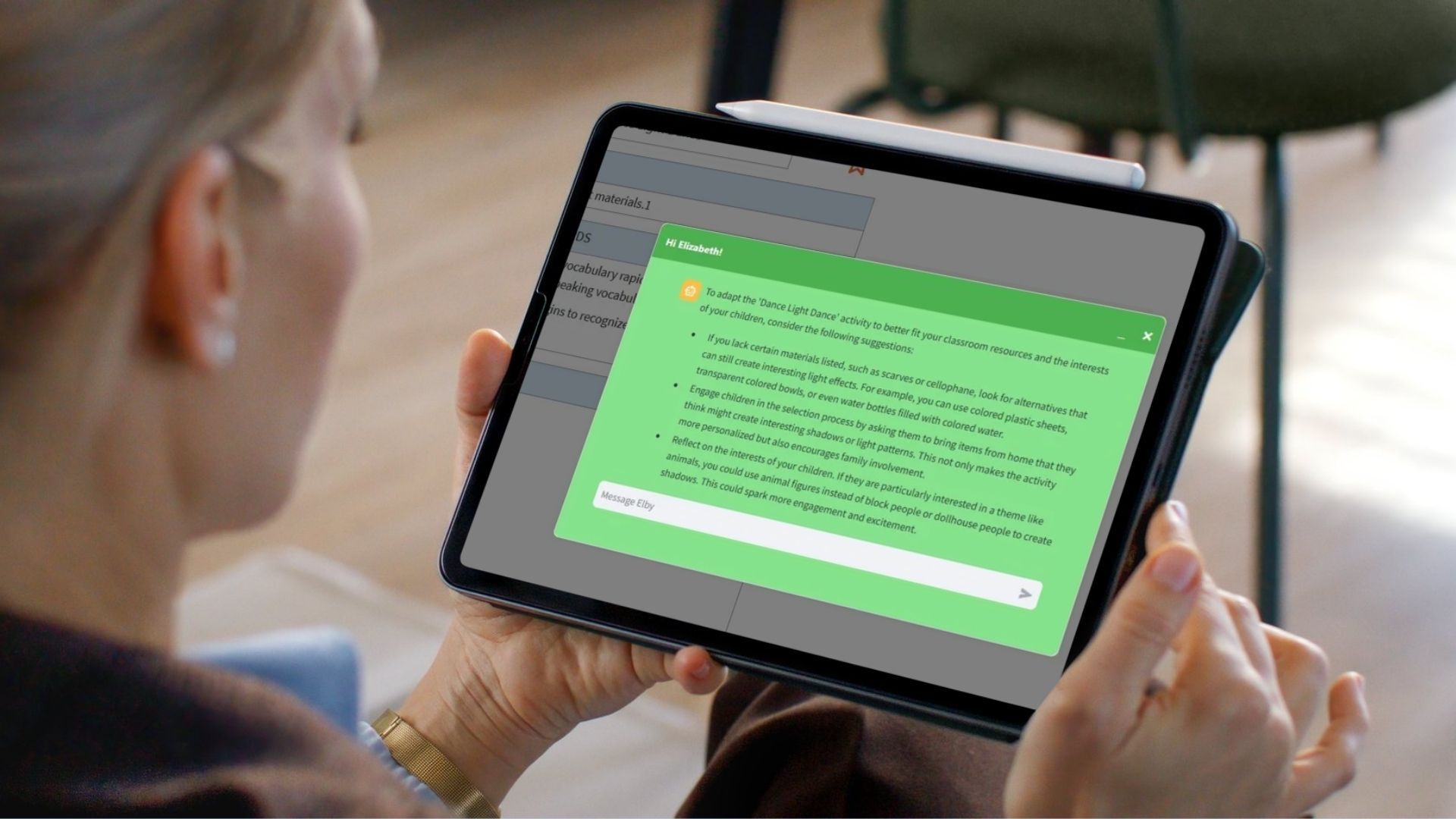
By Suzanne Adinolfi, PhD At Learning Beyond Paper, we are committed to supporting early childhood educators in their mission to lay the foundation for a lifetime of learning. Developmentally Appropriate Practice requires educators to implement learning experiences that reflect both what is known about young children in general and about each child specifically. The diverse interests, learning styles, life experiences, strengths, and needs of young learners can pose challenges to even the most creative educators. With this in mind, we are delighted to introduce Elby, our Virtual Curriculum Coach. Elby supports educators in providing individualized learning experiences tailored to the specific needs, interests, and developmental levels of each child. Research suggests that individualizing lessons ensures that all children, regardless of their abilities or backgrounds, have access to meaningful learning experiences. When young learners engage in activities that have been tailored to their unique interests and abilities, their confidence and self-esteem grow. Providing targeted scaffolding that tailors lessons to fit the specific needs of young learners leads to improved child outcomes and more positive classroom interactions. Elby makes it possible to move beyond the practice of providing one-size-fits-all activities and offer intentional learning experiences for all types of young learners. Whether it’s adapting activities for children who may be sensitive to sensory stimuli or integrating special interests to encourage participation from a distracted learner, Elby is able to provide teacher support in real time. This unique tool designed with educators in mind provides each educator with a curriculum coach capable of addressing their questions and instructional needs. With Elby’s guidance, educators can ensure their lessons meet state standards and scope sequences while enhancing them with customized modifications for individual learners. Elby provides multilingual features to support the needs of English Language Learners and create opportunities for family engagement. Educators may use Elby to develop content related language modeling opportunities and offer high quality feedback. Elby leverages AI to level the playing field for all educators regardless of experience or education level. While there is little doubt that this technology can enrich early learning environments, it is essential to note that Elby must be used with intention by caring, creative and child-centered educators. Elby AI is intended to enhance and not replace the vital connection between educators and their young learners.

In the world of early childhood education, you’re not just teachers—you’re guides, mentors, and caregivers who shape the foundation of a child’s life. You nurture, inspire, and support children through every milestone. And with this great responsibility comes the challenge of managing behavior and promoting learning in a way that feels positive and constructive for both you and your students. The Power of Social-Emotional Development (SED) for Young Learners Imagine a classroom where children learn to understand and manage their emotions, build relationships, and make responsible choices. This is the vision behind how Learning Beyond Paper weaves social-emotional learning throughout its more than 4,000 daily activities and 52 weeks of lesson plans. For Infants through Pre-K 4, SED isn’t just another component of a lesson plan—it’s the groundwork for a lifetime of skills. By fostering social-emotional competencies, you’re laying the building blocks for executive functioning, which is critical for learning, problem-solving, and self-regulation. Behavioral challenges are natural in early childhood education classrooms, as babies and young children are just learning how to express themselves, understand others, communicate their emotions and navigate social interactions. Emotions are often expressed through behavior. With SED integrated into our curriculum, you can approach behavioral challenges proactively, providing young children with the skills to communicate, cooperate, and manage. Learning Beyond Paper helps teachers to guide children through emotions in a way that encourages healthy, balanced growth. Why Early SED Integration Matters Research shows that early SED contributes to greater school readiness, higher academic achievement, and even future success in the workforce. By incorporating SED into early education, you’re not only helping children regulate their behaviors today, but you’re setting them up for lifelong success on their learning journey. Supporting the social-emotional growth of Infants through Pre-K 4 doesn’t have to be an uphill battle. Learning Beyond Paper stands by your side with the resources and tools you need to help children manage their emotions and affect behavior in the classroom. Together, let’s give every child the skills to grow, connect, and thrive. By Laura Delgado, M. Ed.
By Laura Delgado Choosing the right curriculum partner is a critical decision that can significantly impact the quality of education in your learning environment. The right partner will not only provide high-quality content but also support your educators in delivering that content effectively. Here are five key factors to consider when selecting a curriculum partner: 1. Alignment with Educational Standards A top priority is ensuring that the curriculum aligns with state and national educational standards. Your curriculum partner should provide resources that are not only research-based but also fully aligned with the latest standards, ensuring that your educators are teaching relevant and up-to-date material. This alignment guarantees that children are receiving an education that meets the necessary benchmarks to prepare them for kindergarten and beyond, setting the stage for long-term academic success. 2. Comprehensive Professional Development A great curriculum is only as effective as the teachers who implement it. Look for a partner who offers robust professional development opportunities. This includes initial training on how to use the curriculum, ongoing coaching, and resources, like video guides and communities of practice. The goal is to continually build teacher capacity, enabling them to deliver the curriculum with confidence and skill. 3. Focus on Inclusivity and Differentiation Every classroom is diverse, and your curriculum should reflect that. A strong curriculum partner will provide resources and strategies for differentiating instruction to meet the needs of all children, including those with special needs and dual-language learners. They should also emphasize inclusive practices, ensuring that every child feels valued and supported in their learning journey. 4. Digital Accessibility and Support In today’s digital age, a curriculum must be easily accessible in a digital format. Ensure that your curriculum partner offers digital resources that are user-friendly and available in multiple languages, like English and Spanish. Additionally, look for partners who provide technical support to help educators navigate these resources effectively, ensuring seamless integration into daily teaching. 5. Proven Track Record and Industry Partnerships Reputation matters. A curriculum partner with a proven track record of success and strong industry partnerships can provide a significant advantage. Look for partners who collaborate with well-regarded companies like Lakeshore and Procare. These partnerships often reflect a commitment to quality and innovation, giving you confidence that the curriculum will meet high standards and deliver real results in the classroom. Final Thoughts Selecting the right curriculum partner is about more than just the content; it’s about finding a partner who will support you every step of the way. By prioritizing alignment with standards, professional development, inclusivity, digital accessibility, and a proven track record, you’ll set your educators and children up for success.
By Laura Delgado, M.Ed.

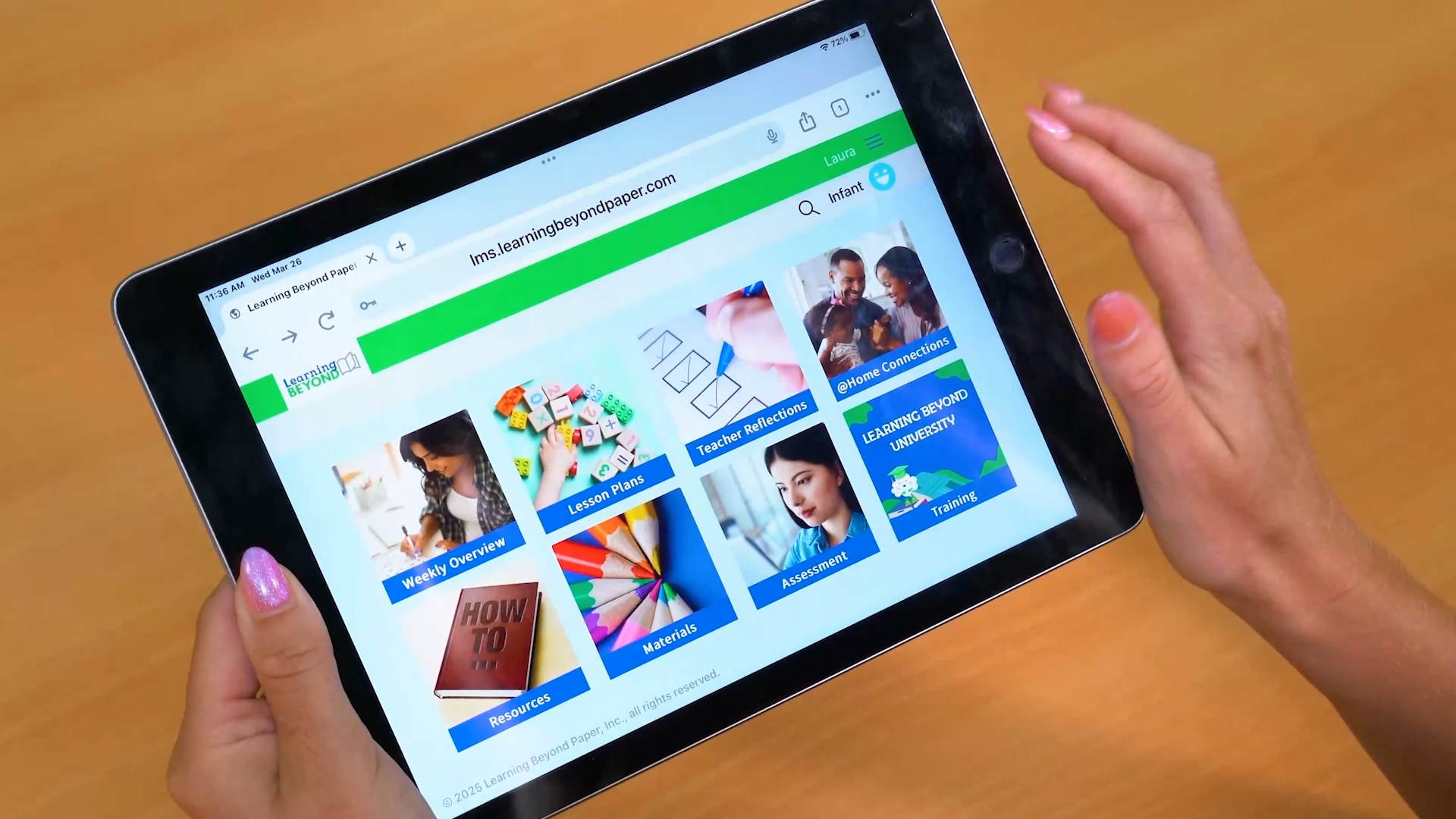
By Dr. Beth Mills In today's world, early childhood education faces numerous challenges, often termed “the childcare crisis.” Amidst rising costs, the demand for high-quality care grows, pushing stakeholders to seek sustainable solutions. A promising response to these issues is Learning Beyond Paper (LBP). Why LBP? Affordability & Current Curriculum: One major hurdle in childcare is the expense of quality curriculum. LBP offers an affordable, continuously updated curriculum, ridding educators of outdated materials. This digital-native approach not only cuts costs but also provides current, research-backed education to every child. Time-Saving Tools: Many educators often face the daunting task of planning, documenting, and completing paperwork beyond school hours. LBP presents 52 weeks of structured activities, ensuring that educators spend more quality time with students rather than on administrative tasks. Staff Retention: The early childhood sector faces significant staff shortages. LBP equips educators and caregivers with essential tools, ensuring they're prepared, knowledgeable, and confident. When educators and caregivers feel supported and equipped, they're more likely to stay. Ongoing Professional Development: LBP provides continuous training and professional development opportunities, ensuring educators stay updated with effective strategies and best practices in the field. Equity and Inclusion: LBP champions an inclusive approach, encouraging educators and caregivers to celebrate individuality and differences. With access to @Home Connections, parents are also kept in the loop, fostering stronger home-school partnerships. Intentional Teacher-Child Interactions: Secure relationships are essential for young children. LBP curriculum ensures educators engage in sensitive, meaningful interactions that promote understanding and language skills. Holistic Learning Approach: LBP ensures children experience a well-rounded learning journey, incorporating STEAM, Language, Literacy, and Physical Development activities. The curriculum is geared towards fostering creativity, critical thinking, and collaborative skills, essential for the 21st-century world. In essence, Learning Beyond Paper is not just a curriculum platform; it's a comprehensive solution addressing the diverse challenges of the early childhood sector. With its innovative approach, LBP is poised to reshape the future of early childhood education.

Building quality relationships with children is embedded throughout LBP. Teachers are encouraged to create safe and nurturing learning environments for Emotional Support. Joy in learning and being aware of children’s needs are central to the curriculum. Learning Beyond Paper emphasizes the interests of the children, allowing them to take the lead and guide their learning. Many opportunities for choice and student responsibility are included throughout the activities. Teacher talk provides examples of eliciting ideas and perspectives from children. Under the Classroom Organization Domain, teachers are provided lists of materials and guidance on implementing developmentally appropriate, play-based activities. Each activity has a clear objective and can accommodate a variety of learning styles—teachers model behaviors of respect, caring, self-control, and fair decision-making. Expectations and rules are communicated clearly within the activities. The Teacher's Guide assists with setting up the classroom environment, including planning the schedule, routines, and transitions. For Instructional Support, opportunities to stretch children's thinking are consistently offered. Children are encouraged to problem-solve, make predictions, experiment, and evaluate their learning. Teachers scaffold each child's learning path with hints, suggestions, and modeling. Teacher talk examples include extended feedback loops and opportunities for children to explain their thinking. Encouragement and affirmation inspire persistence and continued involvement. Teachers are encouraged to talk with children and have extended conversations to support language development.

The classroom’s physical environment, both indoor and outdoor, set the stage for learning. The physical environment sends strong messages to children and adults about what is valued, who is valued, and what learning can occur within the spaces designed. As the teacher, your mindset is visible in the environment. The type of activities and learning that go on are reflective of your mindset. The emotional environment created by the teacher is also important. You should look to see that the values between the physical and emotional environment show consistency. The majority of a child’s day is spent in the physical environment you design. Design your space in a way that offers children the opportunity to feel comfortable owning the space. It’s their space as much as yours. No matter how your space currently looks, you must continuously reflect on the space and use of space to make updates and changes that provide improvement. When you are in the mindset of a reflective practitioner, nothing is ever indeed “done” or complete. While things should run smoothly, there are always opportunities to improve and enhance your program, thoughts, and experiences for children for this year’s particular group of children. The terms “environment” and “space” mean all indoor AND outdoor spaces children use. Sometimes, people consider only indoor space; however, outdoor spaces often have more space and opportunities to create than what may be available indoors. In most parts of the country, outdoor spaces can host a full range of activities, not just gross motor play, throughout the school year. Here are some key takeaways about intentional environments that can help your teachers and children thrive: Intentional setting up the environment will help children learn, grow, and develop different skills. The environment can be the other teacher in the classroom. Meaning, if a learning area or classroom environment is set up with intentionality, learning goals in mind and with age-appropriate materials, children will learn from this setting. The classroom library shouldn’t be the only area that has books. Add books to every learning center as well as the outside environment to promote literacy and celebrate books. Add an area where children and families are represented in the classroom environment. Adding pictures of children and their families will create strong connections and bonds between the family, teacher, and child. Allow children to add to wall space with their creations, art, and projects. Adding decorations takes away space from children and can make the environment seem cluttered and overwhelming. The outside area is an extension of the classroom. Outside is a learning environment full of learning potential for every child. Bring blocks, toys, art supplies, dramatic play, and books outside. We hope you have fun setting the stage for learning, a process that is constantly changing based on your observations and lessons! Enjoy!

Making your child care center a great place to work with a positive work culture for all employees is key to educators’ well-being and success, as well as to the happiness and success of the children your center educates! Happy workplaces make happy teachers! By building a positive culture where individuals feel valued, respected and heard, a sense of teamwork, friendship and camaraderie is created. Also, who wants to leave a job you actually look forward to going to each day–even if it might be slightly less pay than another job? Let’s find out how to build a positive work environment! Here are some great ways to boost morale and create a feeling of connection among colleagues on a personal level: Celebrate accomplishments, special events and birthdays for the staff Greet every person on the team by name every day Have chocolate or sweets on your desk and encourage everyone to stop by and say hello Always have a smile on your face. Model the behavior and body language you want to see in your staff. Get to know each member of your team Learn their communication style– Are they a hugger or straight to the point person? Have each member fill out a quick “get to know you” questionnaire and make it accessible to everyone. Include: Birthdays Favorite color Favorite food, candy, and store Schedule a 15-minute meeting with team members and: Ask about their family Career goals Like/dislikes How do they like to receive praise Where do they see themselves in 5 years…and it’s ok if it’s not with your organization! No shop talk! There are also ways to create a positive working environment during the work day and woven through daily activities. Here are a few: Be a servant leader. Offer to help your teacher with anything at any time Ask teachers to lead parts of the staff meeting Go into the classroom and just play with kids, offer a 5-minute break or make a positive comment about a display or bulletin board Delegate. This shows trust and professional development Provide ongoing professional development and education, and attend Professional Development courses with your team so you can support them By prioritizing a positive work culture, you can change the entire dynamic of your child care center into one that leads to the well-being and success of all. With just a few, simple, positive changes that show teamwork, support, admiration, appreciation and respect, your child care center can be a place teachers look forward to coming to each day! So don’t wait! Try a few – or all – of these tips in your center and watch the morale improve.
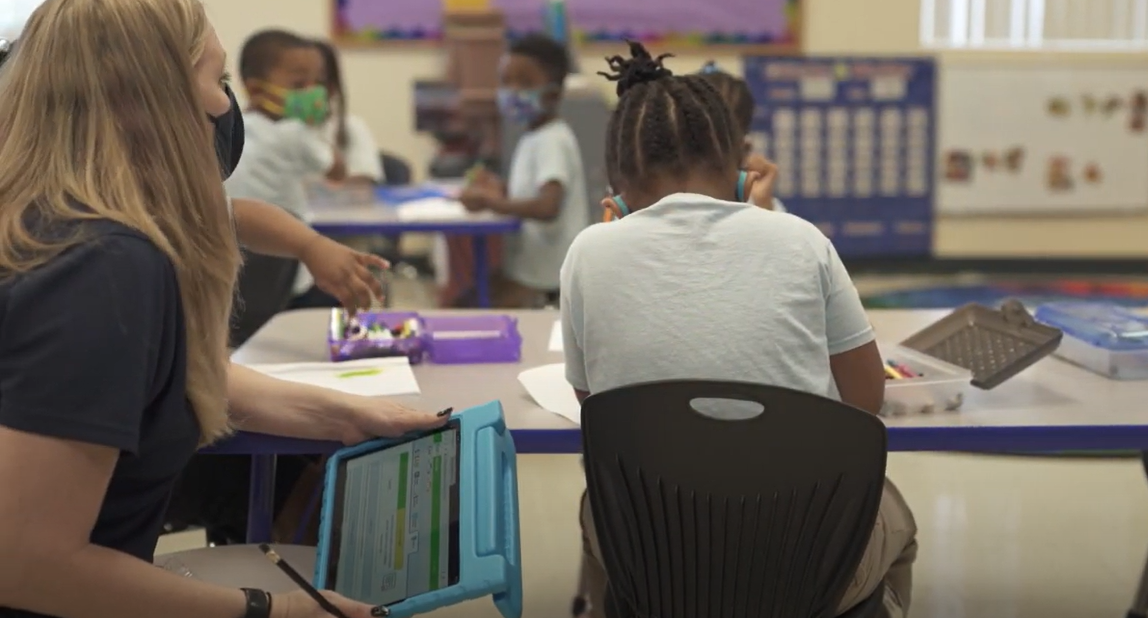
In this post, we’ll explain how innovation in early learning curriculum impacts the success of child care programs. We will dive into the types of curriculum solutions Millennial and Gen Z teachers are seeking and provide tips to evaluate how you can think differently to solve challenges for your program.