
Is your child starting preschool soon, and you genuinely are not sure what they should be learning? Most parents walk into this stage with more questions than confidence, and the conflicting advice online rarely brings clarity.
Here is what this guide covers:
Whether you are a parent choosing a program or an educator building one, this article gives you a practical and honest look at what quality early education actually looks like in a real classroom.
Think of a preschool curriculum as a development blueprint, not an academic syllabus.
It is more about building the foundations children need to grow as learners rather than teaching three-year-olds to read.
A strong curriculum connects daily activities to real developmental goals, helping educators stay intentional rather than reactive.
Many parents assume curriculum means a strict academic schedule. Early childhood research does not support that.
Understanding what a preschool curriculum includes, is that the goal is not to accelerate academic output, but more about building well-rounded, curious, and emotionally grounded children.
Whether you are just beginning to think about creating a lesson plan for toddlers in daycare or designing a full preschool program, this principle applies across all early learning ages.
| Component | What It Means | Why It Matters |
| Curriculum | A structured plan tied to developmental goals | Ensures no area of growth gets overlooked |
| Play | Guided and free exploration through activity | Builds creativity, language, and early thinking |
| Activities | Purposeful tasks linked to specific skills | Bridges classroom experience and real-world learning |
Leaving out even one of these areas creates uneven development. Each domain supports the others, and progress in one area strengthens the rest.
Cognitive development covers thinking, memory, and early problem-solving. Puzzles, sorting games, and pattern activities are strong tools at this stage.
A child sorting objects by color or size is not just playing. They are building logical reasoning that carries directly into formal schooling.
Vocabulary, listening, and early communication skills develop fast between ages three and five. Strong language programs are built on:
Research backed by the Council for the Accreditation of Educator Preparation confirms that in 2026, building language foundations should look like rich read-alouds and playful sound games, not structured worksheets.
Fine motor and gross motor skills both need time in the weekly plan. When planning circle time for preschoolers, physical transition activities between sessions also support motor development while helping children regulate their energy.
Key physical activities to include:
This is the area most parents underestimate. Learning to share, manage frustration, and cooperate with others are academic competencies in disguise.
Research published in January 2026 confirmed that delays in social-emotional development are directly linked to behavioral problems and academic underachievement in later school years.
Art, music, dramatic play, and imaginative activities give children ways to process their experiences. Creative development also strengthens memory, emotional regulation, and communication in ways that structured academic lessons rarely can.
| Development Area | Example Activity | Skill Developed |
| Cognitive | Sorting games, puzzles, pattern play | Problem-solving, early logic |
| Language | Storytelling, rhyming, read-alouds | Vocabulary, communication |
| Physical | Drawing, outdoor play, climbing | Fine and gross motor skills |
| Social and Emotional | Group activities, emotion check-ins | Empathy, self-regulation |
| Creative | Art, music, dramatic play | Expression, emotional processing |
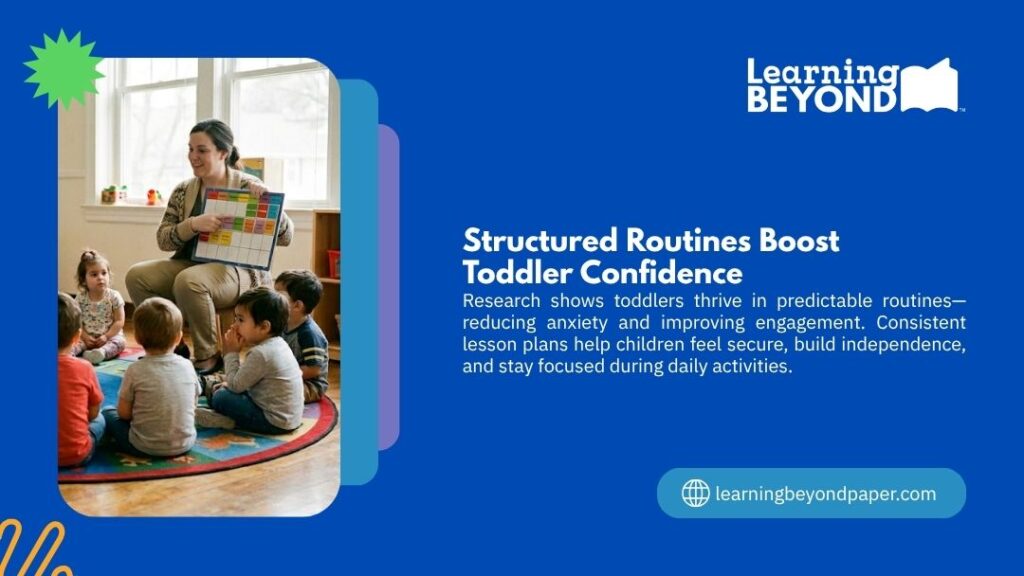
Most parents expect worksheets and structured lessons. Real preschool learning looks very different.
Play is structured learning in early childhood.
A 2024 to 2025 study published in the American Journal of Language, Literacy and Learning found that play-based strategies produced measurable gains in children’s reasoning, language, emotional intelligence, and cooperative behavior.
A child building a block tower is learning spatial reasoning, cause and effect, and persistence. That process cannot be replicated on a worksheet.
Teachers in strong preschool programs do not just supervise. They observe, ask questions, and extend children’s thinking with well-timed support.
This scaffolded approach helps children go deeper into what they are already curious about.
The same principle applies when working with a developmentally appropriate curriculum for toddlers: follow the child’s lead while adding purposeful challenges at the right moment.
| Activity Type | Teacher Role | Learning Outcome |
| Free play | Observe and gently guide | Creativity, independence |
| Group play | Facilitate peer interaction | Social skills, communication |
| Structured task | Direct instruction and modeling | Focus, early academic skills |
Structure gives young children a sense of safety. When children know what comes next, they spend less energy on uncertainty and more on learning.
A well-designed preschool day includes a mix of quiet, active, social, and creative experiences.
In 2026, many programs treat outdoor time as a dedicated learning block rather than a break.
Research connects active outdoor play to improved empathy, emotional regulation, and social confidence in young children.
| Time | Activity | Purpose |
| Morning | Circle time and welcome | Communication, routine-building |
| Mid-morning | Learning stations or guided activity | Skill development across all 5 domains |
| Late morning | Outdoor play | Motor skills, emotional regulation |
| Midday | Creative session (art, music, drama) | Expression and sensory development |
| Afternoon | Story time and group reflection | Language, comprehension, winding down |
For educators also working with age-appropriate activities for 2-year-olds in daycare, a similar daily rhythm works well, with shorter activity windows and more sensory exploration built into each transition.
A 3-year-old and a 5-year-old should not be held to the same expectations. Milestones shift significantly across just a few months at this age, and a well-built preschool curriculum framework needs to account for that.
| Age | Key Focus | Example Skills |
| 3 to 4 years | Exploration and basic social interaction | Sharing, naming objects, drawing simple shapes, counting to 5 |
| 4 to 5 years | School readiness and growing independence | Writing first name, counting to 20, following multi-step instructions |
Children at age 3 are still building their sense of self within a group. By age 5, most are ready for sustained focus, structured tasks, and early literacy challenges.
Rushing that natural progression creates anxiety rather than readiness.
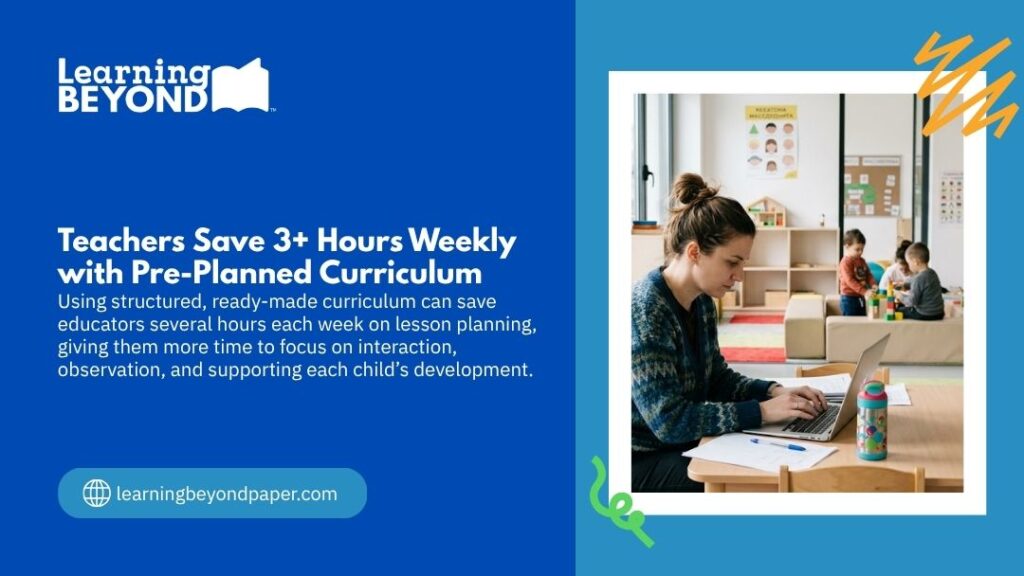
Not all programs deliver equally. Some well-intentioned approaches can quietly slow development down rather than support it.
Pushing formal reading and writing before children are developmentally ready is one of the most common mistakes in early education.
Research by child psychology professor Kathy Hirsh-Pasek found that heavily academic preschool environments have little benefit for children’s skills and may dampen creative expression while creating anxiety.
A separate study found that children who attended academically focused pre-K programs were actually behind their peers by elementary school, with noticeable increases in behavioral challenges along the way.
Understanding what a preschool curriculum includes also means knowing what it should not prioritize: formal academic outputs before the developmental groundwork is in place.
Leaving social-emotional learning out of a preschool education syllabus is a costly oversight. Children who do not develop self-regulation, empathy, and cooperative skills early carry those gaps into kindergarten and beyond.
Other patterns worth avoiding:
| Common Mistake | Impact on the Child |
| Too much academic pressure | Stress, disengagement, reduced curiosity |
| No play-based learning | Weaker problem-solving and creativity |
| Ignoring social-emotional development | Behavioral challenges, communication gaps |
| Rigid one-size-fits-all structure | Unmet developmental needs across the group |
Parents often find it difficult to tell whether a program is genuinely strong or just well-presented.
Visiting a classroom and observing what happens there gives far more information than any brochure can.
Here is what to look for during a visit:
| Quality Criteria | Present in the Program? |
| Balanced coverage across all 5 developmental domains | Yes / No |
| Play-based and experiential methods are actively used | Yes / No |
| Emotional development receives dedicated time | Yes / No |
| Pacing is appropriate for the ages in the room | Yes / No |
| Teacher interaction is warm and responsive | Yes / No |
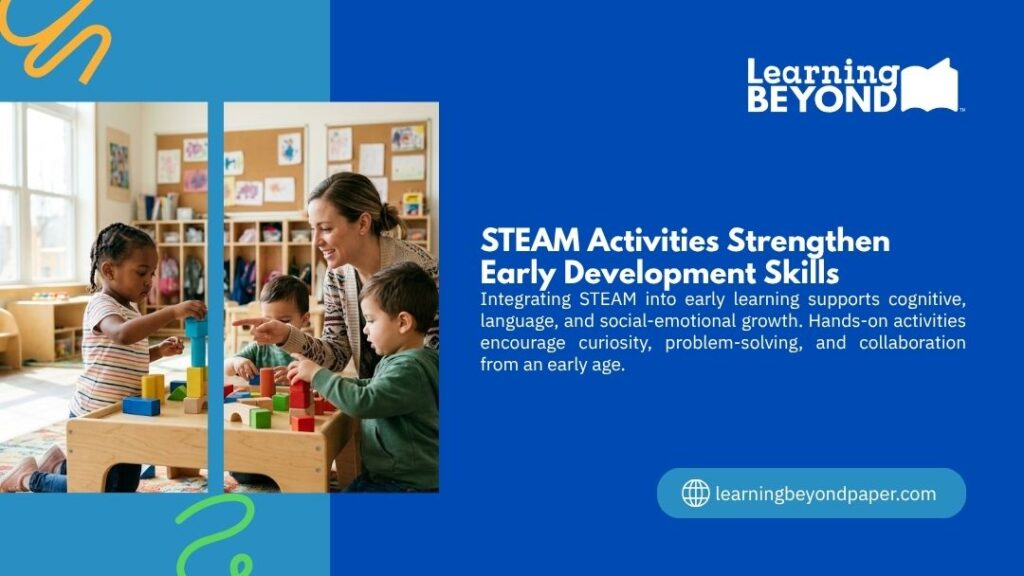
Early education is shifting away from rote learning and toward real skill development.
The OECD Education Policy Outlook 2025 confirms that play-based and experiential learning, combined with emotional regulation support, contributes to positive lifelong outcomes.
This shift begins in preschool, not university.
According to the Zipdo Education Report 2025, 92% of students engaged in experiential learning report gaining skills that traditional education does not cover. The habits that make experiential learning effective start forming between ages three and five.
Knowing what a preschool curriculum includes gives parents and educators the ability to ask better questions, make more informed choices, and recognize when a program is rushing development rather than genuinely supporting it.
For educators who also support younger learners, activities for young toddlers 12 to 18 months provide a helpful reference for understanding how development unfolds before preschool age begins.
A strong preschool curriculum covers five core areas: cognitive development, language and communication, physical development, social and emotional learning, and creative development.
Quality programs address all five through a mix of play-based and structured activities throughout the day.
School readiness goes beyond letters and numbers. It includes the ability to follow instructions, regulate emotions, engage in group settings, and communicate clearly.
A well-designed preschool learning framework builds all of these through daily routines and purposeful activities.
Start with clear developmental goals for each of the five core areas. Then design activities that address those goals through play, movement, and social interaction.
Build in a predictable daily rhythm and leave room for flexibility based on how the group responds on any given day.
Play-based and experiential approaches consistently show the strongest outcomes for children aged three to five.
Programs that balance child-led exploration with teacher-guided learning, and that address all five developmental domains together, produce the most well-rounded early learners.
Learning Beyond Paper has already reached over 160,000 children across more than 3,000 schools, and every part of the platform is built to make high-quality early childhood education practical for real classrooms.
Each activity connects to clear developmental goals across all five learning domains.
Whether you are a parent trying to understand what your child’s program should be covering, or an educator ready to bring more structure to your sessions, Learning Beyond Paper is where that work begins.
If you want a preschool program that genuinely supports every stage of your child’s development, with activities rooted in real learning science, book a free demo today to find the right plan for your classroom or your child.