
Choosing among HighScope alternatives is not about replacing a respected curriculum with the newest name on the market. It is about finding the right fit for your teachers, your classrooms, your budget, and the way your early childhood program runs on a real Monday morning.
HighScope has a long history in early childhood education, especially for programs that value active learning, child choice, consistent routines, and the Plan-Do-Review model. Still, some directors need a different type of support. They may want a more digital preschool curriculum, clearer lesson access, bilingual classroom materials, lower prep time, better family engagement, or a curriculum that helps new teachers feel confident faster.
This guide compares HighScope alternatives with a fair lens. Each option has strengths, trade-offs, and a specific program type where it may work best.
The best HighScope alternatives are not all the same type of product. Some are complete early childhood curriculum programs. Some are curriculum platforms. Some are classroom models. Some are philosophies that require deeper teacher training and a carefully prepared environment.
That distinction matters. A director searching for HighScope alternatives may be comparing a research-based preschool curriculum, a daycare preschool curriculum, a cloud-based lesson planning system, a curriculum for daycare, or a broader early childhood education curriculum. Before choosing, it helps to define what your team needs most: a classroom model, digital lesson access, assessment tools, family communication, teacher training, or a complete curriculum package.
HighScope’s own preschool curriculum is built around decades of research, active learning, child decision-making, and the Plan-Do-Review routine. That makes it a strong model for programs that can support implementation with consistency. The question for many directors is not whether HighScope has value. It does. The better question is whether another curriculum gives your team a better fit for day-to-day planning, onboarding, standards alignment, and classroom support.
NAEYC defines developmentally appropriate practice as “methods that promote each child’s optimal development and learning through a strengths-based, play-based approach to joyful, engaged learning.” That definition is a useful anchor for this comparison. Whether a program chooses HighScope, Learning Beyond Paper, The Creative Curriculum, Frog Street, Montessori, Reggio Emilia, or another model, the curriculum should support young children through meaningful play, intentional teaching, strong relationships, and age-appropriate learning.
A strong preschool curriculum should do more than provide attractive lesson plans. It should help teachers know what to teach, why it matters, how to adapt the lesson, how to document growth, and how to keep families connected. For childcare directors, the right curriculum also has to work across staff skill levels, classroom age groups, and budget cycles.
When reviewing HighScope alternatives, look closely at the daily teacher experience. A curriculum may be research-based and still feel hard to use if teachers need too much prep time. Another program may look simple, but lack enough depth for Head Start, state standards, CLASS indicators, or kindergarten readiness. The best fit usually sits between structure and flexibility.
| What to compare | Why it matters for directors | What to ask before choosing |
| Curriculum delivery | Paper kits, binders, and digital platforms create very different daily workflows | Will teachers open one clear system, or will they have to gather materials from several places? |
| Age coverage | Some programs split infant, toddler, preschool, and Pre-K resources into separate products | Does one curriculum cover your full program, or will you need multiple purchases? |
| Standards alignment | Many programs need state standards, Head Start ELOF, CLASS, QRIS, or accreditation support | Can the curriculum help show alignment without extra admin work? |
| Teacher support | New teachers often need more than written lesson plans | Does the curriculum include training, coaching, lesson guidance, or professional development? |
| Family engagement | Families want to understand what children learn and how to support it at home | Are bilingual family resources and communication tools included? |
| Implementation effort | A strong curriculum can fail if the team cannot use it well | How much training, planning time, and leadership oversight will the model require? |
| Total cost | The sticker price rarely tells the full story | Are there add-ons, kits, per-classroom fees, replacement materials, or training costs? |
The following are some of the best HighScope alternatives for programs comparing curriculum style, teacher support, classroom structure, and implementation fit.
| HighScope alternative | Best for | How it differs from HighScope |
| Learning Beyond Paper’s early childhood curriculum | Programs that want cloud-based access and built-in teacher support | Less philosophy-dependent and more platform-driven, with ready-to-use digital lessons and real-time instructional support |
| The Creative Curriculum for Preschool | Large programs, districts, Head Start, and teams that want a full ecosystem | Broader ecosystem with curriculum, assessment, reporting, and family tools connected in one system |
| Frog Street Pre-K | Structured Pre-K programs, Head Start classrooms, and bilingual settings | More structured and school-readiness focused, with strong daily pacing and social-emotional routines |
| Experience Curriculum | Family childcare, mixed-age groups, and classrooms that like delivered materials | More kit-based and theme-based, rather than a Plan-Do-Review classroom model |
| Montessori-inspired curriculum | Schools that value independence, order, and self-directed work | A philosophy-based alternative focused on independence and prepared environments, not a plug-and-play curriculum platform |
| Reggio Emilia-inspired curriculum | Programs that value inquiry, projects, documentation, and family collaboration | A philosophy-based alternative centered on emergent projects and the image of the capable child |
| Tools of the Mind | Programs focused on self-regulation, mature play, and executive function | More specialized around self-regulation and mature play than broad curriculum coverage |
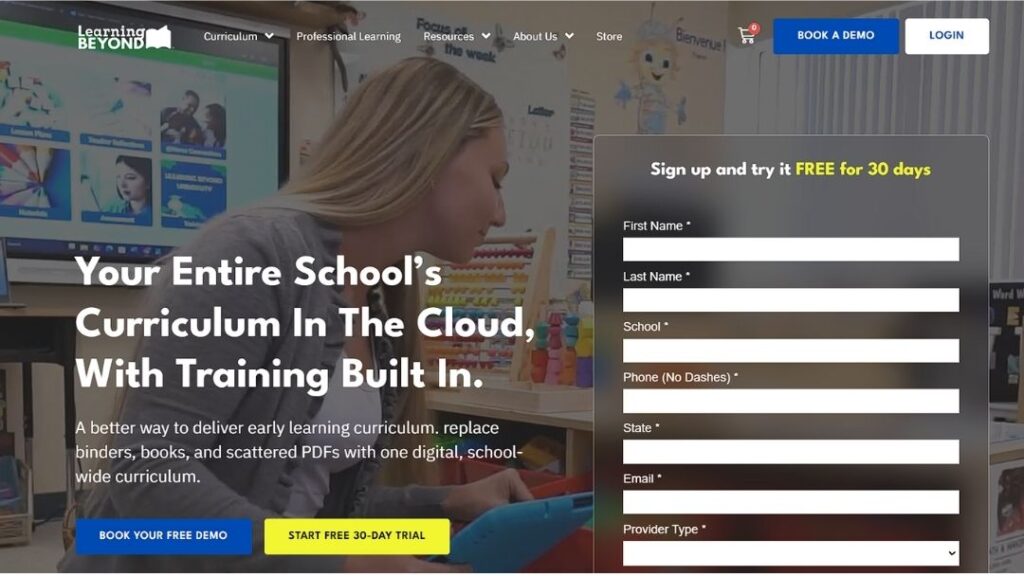
Learning Beyond Paper is a strong HighScope alternative for childcare centers and preschool programs that want a complete curriculum without binders, boxes, or scattered lesson files. It is a cloud-based early childhood curriculum for infants through Pre-K 4, with 52 weeks of lesson plans, more than 4,000 play-based activities, bilingual English and Spanish content, standards alignment, family engagement tools, embedded professional development, and ELBY, the platform’s virtual instructional coach.
Best for: Programs that want a paperless, teacher-friendly curriculum with bilingual support, professional development, family engagement, and easier daily access across multiple age groups.
| Pros | Cons |
| 100% cloud-based curriculum access | Not ideal for programs that prefer physical curriculum kits |
| Covers infant through Pre-K 4 | Digital transition may require staff adjustment |
| Includes bilingual English and Spanish content | Less suited to fully philosophy-led programs |
| Built-in professional development through LBP University | Larger programs may need custom pricing |
| ELBY provides real-time instructional support | Requires reliable device and internet access |
| Aligned with all 50 state standards, Head Start ELOF, and CLASS indicators | Teachers still need proper onboarding for best use |
HighScope is centered on a long-standing active learning model, child choice, and the Plan-Do-Review routine. Learning Beyond Paper is more platform-driven. It gives teachers digital lesson access, bilingual resources, embedded training, family engagement support, and real-time instructional guidance in one system. It may be a better fit for programs that need a modern curriculum teachers can open and use quickly across infant, toddler, preschool, and Pre-K classrooms.
This option may not be the best fit for programs that strongly prefer physical curriculum kits or a philosophy-led model with intensive in-person training. But for centers that want a paperless, teacher-friendly, standards-aligned curriculum, Learning Beyond Paper belongs at the top of the shortlist.
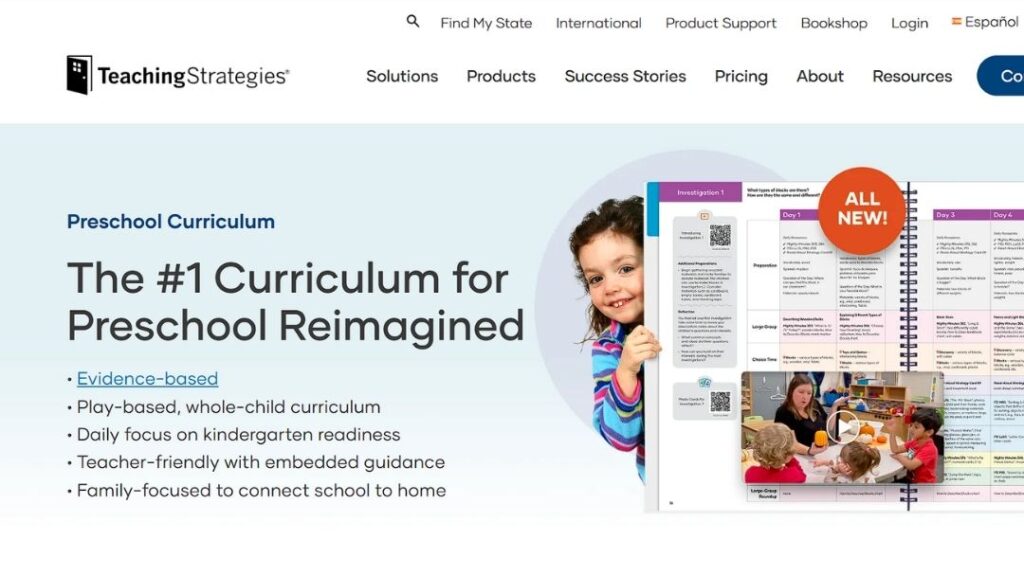
The Creative Curriculum from Teaching Strategies is a well-known early childhood curriculum used by many Head Start programs, public Pre-K classrooms, school districts, and larger childcare organizations. It supports whole-child development through study-based learning, assessment, reporting, family engagement, and professional learning tools. For programs that want a broad curriculum and assessment ecosystem, it can be a strong HighScope alternative.
Best for: Larger programs, districts, Head Start providers, and multi-site organizations that want curriculum, assessment, family engagement, and reporting tools connected in one broader system.
| Pros | Cons |
| Strong name recognition in early childhood education | Can feel complex for smaller programs |
| Supports whole-child development | May require more onboarding and admin oversight |
| Includes curriculum and assessment tools | Total investment may be higher |
| Offers professional learning resources | Teachers may need training to use it well |
| Useful for large-scale implementation | Not always the simplest day-to-day option |
| Supports family engagement and reporting | Smaller centers may not need the full ecosystem |
HighScope focuses heavily on active learning, classroom routines, adult-child interaction, and Plan-Do-Review. The Creative Curriculum may appeal more to programs that want a broader connected system with curriculum, assessment, reporting, professional development, and family engagement tools. It is often a better fit for organizations that need more infrastructure around curriculum management.
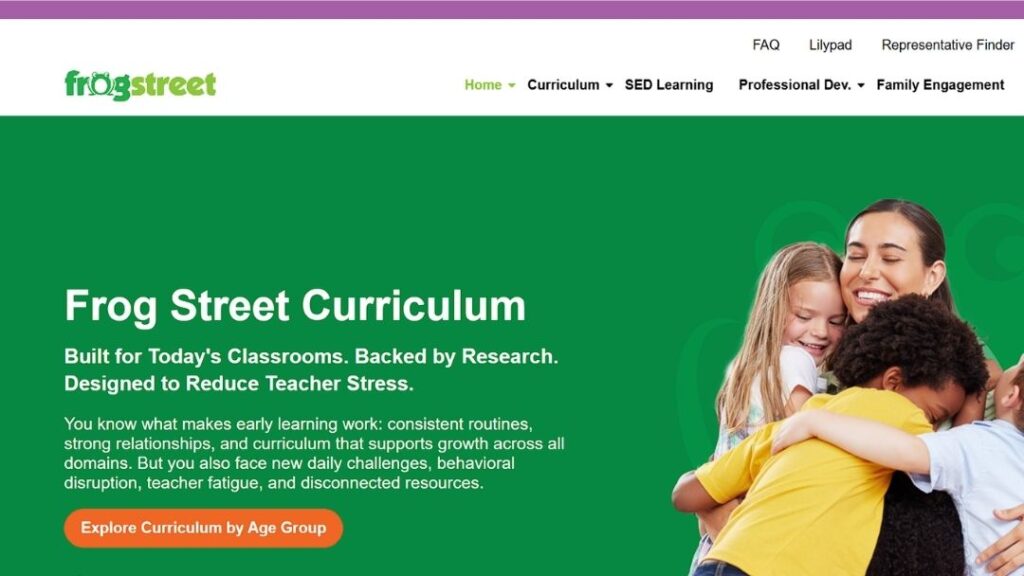
Frog Street is a structured early childhood curriculum that supports Pre-K readiness, bilingual classrooms, family engagement, and social-emotional learning. It gives teachers clear pacing, routines, lessons, visuals, and support materials. For programs that want more day-to-day structure than a purely emergent approach, Frog Street can be a practical option.
Best for: Pre-K programs, Head Start classrooms, QRIS-focused centers, and bilingual classrooms that want clear lesson flow, predictable routines, and school-readiness support.
| Pros | Cons |
| Clear daily and weekly structure | May feel too structured for emergent classrooms |
| Strong Pre-K readiness focus | Requires teacher training for best results |
| Bilingual resources are available | Materials may need organization and storage |
| Supports social-emotional development | Less flexible than some child-led models |
| Helpful for consistent classroom routines | Not always the best fit for mixed-age flexibility |
| Useful for Head Start and QRIS-aligned programs | Implementation can take planning time |
HighScope gives children a strong role in planning, doing, and reviewing their work. Frog Street offers more explicit pacing and structured lesson flow. It may work better for programs that want predictable routines, school-readiness goals, bilingual materials, and social-emotional support built into daily instruction.
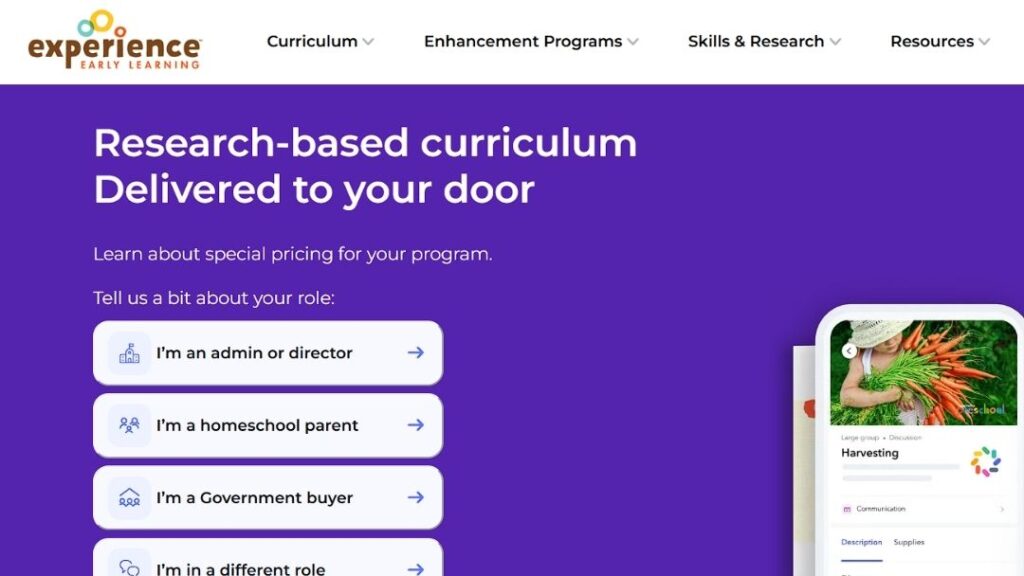
Experience Curriculum, formerly known as Mother Goose Time, is a theme-based curriculum that provides ready-to-use lesson plans, activity ideas, and physical materials. It is often used by family childcare providers, mixed-age groups, homeschool preschool settings, and small programs that like having monthly materials prepared for them. It can help teachers save planning time while keeping lessons hands-on and playful.
Best for: Family childcare homes, small centers, mixed-age classrooms, and programs that prefer physical curriculum kits with theme-based lesson planning.
| Pros | Cons |
| Ready-to-use monthly materials | Physical kits require storage |
| Helpful for mixed-age classrooms | Less ideal for fully paperless programs |
| Theme-based planning is easy to follow | May offer less digital flexibility |
| Saves teacher prep time | Materials need ongoing organization |
| Good for hands-on activities | Less tied to one deep classroom philosophy |
| Useful for small programs and home-based providers | May not fit larger centers needing centralized digital access |
HighScope is model-driven, with active learning, classroom routines, and Plan-Do-Review at the center. Experience Curriculum is more theme-based and materials-driven. It may be easier for some teachers to use right away, especially in small or mixed-age settings, but it does not offer the same philosophy-based structure as HighScope.
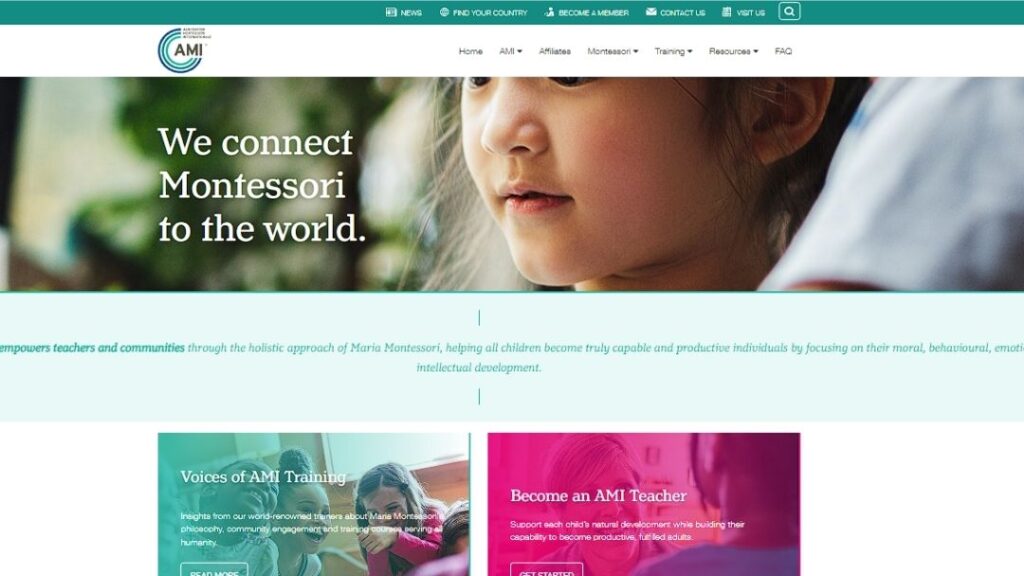
Montessori is a philosophy-based alternative rather than a simple plug-and-play curriculum product. It focuses on independence, concentration, practical life skills, hands-on materials, and a carefully prepared classroom environment. Children often work at their own pace with self-correcting materials while teachers guide rather than lead every activity.
Best for: Programs that value independence, calm classroom routines, self-directed work, hands-on materials, and a strong educational philosophy.
| Pros | Cons |
| Builds independence and concentration | Requires trained Montessori guides |
| Supports hands-on learning | Specialized materials can be costly |
| Encourages self-paced development | Classroom setup must be intentional |
| Works well in prepared environments | Not a quick curriculum switch |
| Strong identity for families seeking Montessori-style education | Fidelity matters for quality |
| Supports calm and purposeful classroom routines | Less suitable for programs wanting ready-made daily lesson plans |
HighScope uses child choice within a consistent daily routine and the Plan-Do-Review sequence. Montessori places more emphasis on prepared materials, independent work, self-correction, and the teacher’s role as a guide. It may be a better fit for programs that want a full educational philosophy rather than a standard preschool curriculum package.
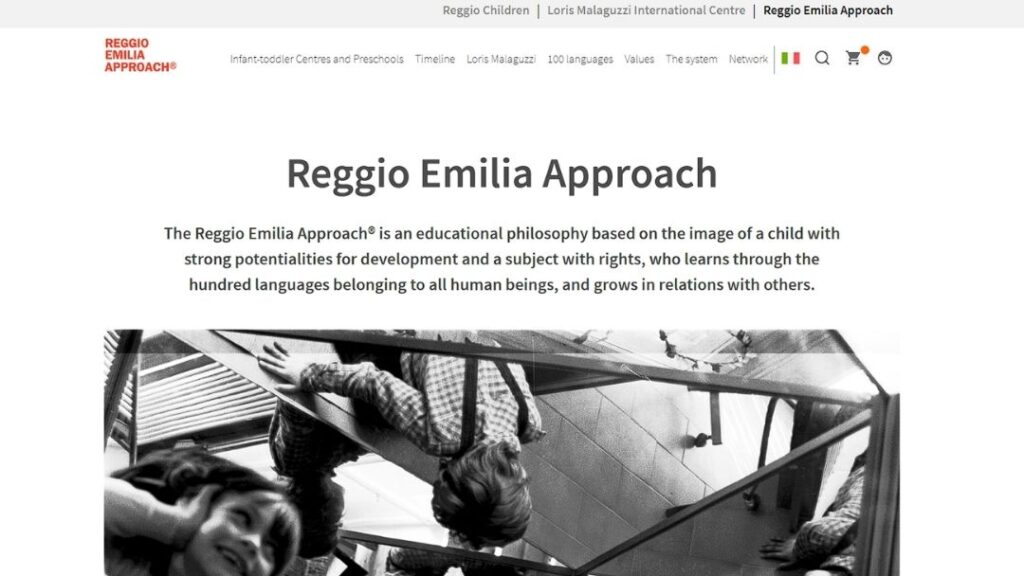
Reggio Emilia is also a philosophy-based alternative, not a standard boxed curriculum. It views young children as capable, curious, and creative learners. Teachers build learning experiences around children’s questions, interests, relationships, materials, long-term projects, and documentation. The classroom environment, family voice, and child expression play a central role.
Best for: Programs that value creativity, project work, child voice, family collaboration, documentation, and inquiry-based learning.
| Pros | Cons |
| Encourages deep exploration | Requires skilled teachers |
| Supports creativity and child expression | Less ready-made structure |
| Strong focus on documentation | Planning can take more time |
| Builds learning around children’s interests | May be hard to standardize across classrooms |
| Encourages family and community connection | Requires strong leadership support |
| Flexible and responsive to children | Not ideal for programs needing a fixed daily syllabus |
HighScope gives programs a defined daily structure through active learning and Plan-Do-Review. Reggio-inspired practice is more emergent, project-based, and documentation-heavy. It may be a stronger fit for experienced teams that can observe children closely and turn their interests into meaningful long-term learning.
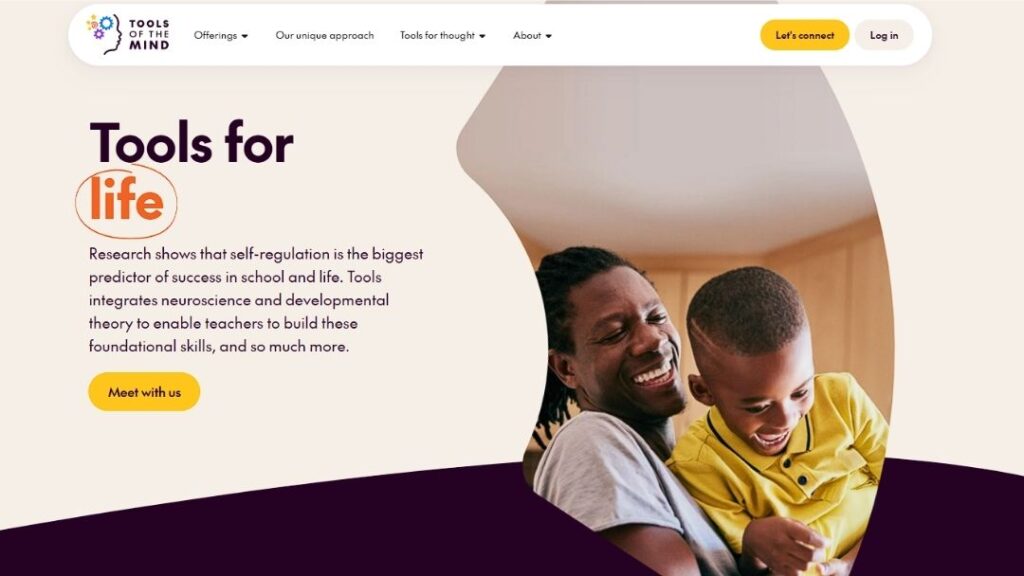
Tools of the Mind is a model-based early childhood program focused on self-regulation, executive function, mature make-believe play, planning, language, and classroom routines. It is often used by programs that want to help children build attention, impulse control, peer interaction, and purposeful play habits.
Best for: Programs that want to strengthen self-regulation, executive function, intentional play, and social development in early childhood classrooms.
| Pros | Cons |
| Strong focus on self-regulation | May not replace a full curriculum platform |
| Supports executive function development | Requires teacher training and fidelity |
| Encourages mature make-believe play | Less broad than all-in-one curriculum systems |
| Helps children plan and reflect | May need added resources for full curriculum coverage |
| Useful for social development | Not ideal for programs wanting simple plug-and-play lessons |
| Supports attention and classroom behavior | Implementation may take time |
HighScope uses active learning and Plan-Do-Review as the main classroom structure. Tools of the Mind focuses more directly on self-regulation, executive function, mature play, and planning. It may be a good fit for programs that already have curriculum coverage but want deeper support for children’s attention, behavior, and purposeful play.

The right choice depends on classroom reality. A curriculum can look strong in a brochure and still fail if teachers do not have the time, training, or confidence to use it well. Directors should compare not only philosophy, but also daily usability, training needs, teacher support, family engagement, standards alignment, age coverage, and total cost.
A useful question is this: what problem are you actually trying to solve? If your team values HighScope’s active learning philosophy but needs easier lesson access, a digital curriculum may help. If your center needs a complete ecosystem with assessment and reporting, Teaching Strategies may be worth exploring. If your Pre-K rooms need structured school readiness and bilingual support, Frog Street may fit. If your teachers prefer physical monthly materials, Experience Curriculum may make sense.
| Program need | Best-fit option to consider | Why it may work |
| Cloud-based curriculum from infant through Pre-K | Learning Beyond Paper | Gives teachers digital access, bilingual content, standards alignment, professional learning, and ELBY support |
| Broad curriculum, assessment, and reporting ecosystem | The Creative Curriculum | Strong for larger programs that want connected curriculum and assessment tools |
| Structured Pre-K with SED and bilingual support | Frog Street | Clear pacing and social-emotional routines can help with classroom consistency |
| Delivered materials and theme-based planning | Experience Curriculum | Useful for teachers who prefer physical materials and monthly themes |
| Independence and prepared classroom environment | Montessori-inspired curriculum | Strong for programs with trained guides and a clear Montessori identity |
| Inquiry, creativity, and documentation | Reggio Emilia-inspired curriculum | Good fit for experienced teams that value emergent projects and child voice |
| Self-regulation and mature play | Tools of the Mind | Strong for programs focused on executive function and intentional play |
Programs should also check whether a curriculum aligns with state early learning standards, the Head Start Early Learning Outcomes Framework, CLASS indicators, QRIS expectations, and licensing needs. The Head Start ELOF covers five central domains across birth to age five, which makes it an important reference point for programs that serve infants, toddlers, and preschoolers.
Learning Beyond Paper may be the best HighScope alternative for programs that want a complete, digital, teacher-friendly curriculum rather than a model that depends heavily on physical resources, binder systems, or extensive outside planning. It is especially relevant for centers that need a daycare preschool curriculum with bilingual English and Spanish support, easy lesson access, family engagement, standards alignment, and teacher guidance built into the platform.
That does not mean HighScope is weak. HighScope remains a respected model for programs committed to active learning, child choice, and Plan-Do-Review. It may be a strong fit for teams that have the training time, classroom consistency, and leadership support to implement the model deeply.
The practical difference is this: HighScope is often best for programs that want to build around a long-standing active learning philosophy. Learning Beyond Paper is often best for programs that need a modern digital curriculum teachers can use quickly across infant, toddler, preschool, and Pre-K classrooms.
For Learning Beyond Paper, the strongest differentiators are its 100% cloud-based format, infant-through-Pre-K coverage, bilingual English and Spanish content, embedded professional development, family engagement tools, all-50-state standards alignment, Head Start ELOF and CLASS support, and ELBY, the virtual instructional coach.
Directors who are still comparing options can review Learning Beyond Paper’s professional learning support and ELBY, the virtual instructional coach, to see how the platform supports teachers beyond the lesson plan itself.
The best HighScope alternative depends on the center’s staffing, budget, classroom model, and training capacity. Learning Beyond Paper may be a strong fit for childcare centers that want a cloud-based curriculum with bilingual content, embedded professional development, family engagement tools, standards alignment, and teacher support. The Creative Curriculum may suit larger organizations that need a broader ecosystem with assessment and reporting. Frog Street may suit structured Pre-K programs that want clear pacing and social-emotional routines.
Learning Beyond Paper and HighScope both support early childhood learning through intentional classroom experiences, but they are different in structure. HighScope is a research-based active learning model known for Plan-Do-Review. Learning Beyond Paper is a cloud-based early childhood curriculum platform with ready-to-use lessons, bilingual resources, professional development, standards alignment, family engagement, and ELBY virtual instructional support.
Montessori and Reggio Emilia can be alternatives to HighScope, but they are philosophy-based approaches rather than simple curriculum products. Montessori requires a prepared environment, trained guides, and specialized materials. Reggio Emilia-inspired practice requires strong documentation, project work, teacher observation, and family collaboration. They can work well, but they usually require more philosophical commitment than a plug-and-play curriculum platform.
Directors should compare age coverage, lesson access, teacher training, family engagement, standards alignment, Head Start ELOF support, CLASS alignment, implementation time, total cost, and day-to-day teacher usability. A curriculum should look good on paper, but it also needs to work during a busy classroom week.
A digital preschool curriculum can help programs reduce paper use, update lessons more easily, support teachers in real time, and keep planning resources in one place. Paper-based curriculum may still suit programs that prefer physical kits or hands-on delivered materials. The better choice depends on how teachers plan, how directors monitor quality, and how much flexibility the program needs.
HighScope may still be the right fit if your program values active learning, child choice, a consistent daily routine, adult-child interaction, and Plan-Do-Review. If your team struggles with planning time, staff onboarding, digital access, bilingual family engagement, or standards documentation, it may be time to compare other HighScope alternatives.
The best preschool curriculum is not always the most famous one. It is the one your teachers can use well, your children can grow through, and your program can afford without creating avoidable stress.
HighScope alternatives should be compared with respect, not as winners and losers. The Creative Curriculum may suit large organizations. Frog Street may suit structured Pre-K programs. Experience Curriculum may suit kit-based classrooms. Montessori and Reggio may suit schools with a strong philosophy and trained teachers. Tools of the Mind may suit programs focused on self-regulation. Learning Beyond Paper may suit centers that want a cloud-based curriculum with bilingual content, embedded professional development, family engagement, and practical daily support.
For childcare directors, the clearest next step is to compare curriculum options against a real week in your classrooms. Ask what teachers will open on Monday morning, how they will adapt the lesson for young children, how documentation will happen, how family communication will work, and how much support new staff will receive.
If your program needs a paperless curriculum that supports teachers without adding more admin work, compare your current planning process with Learning Beyond Paper’s digital curriculum. You can start with the curriculum overview or schedule a demo to see how the platform fits your classrooms before you choose.