Every classroom gets access at once, so the 2s team can start on day one alongside the rest of the center.

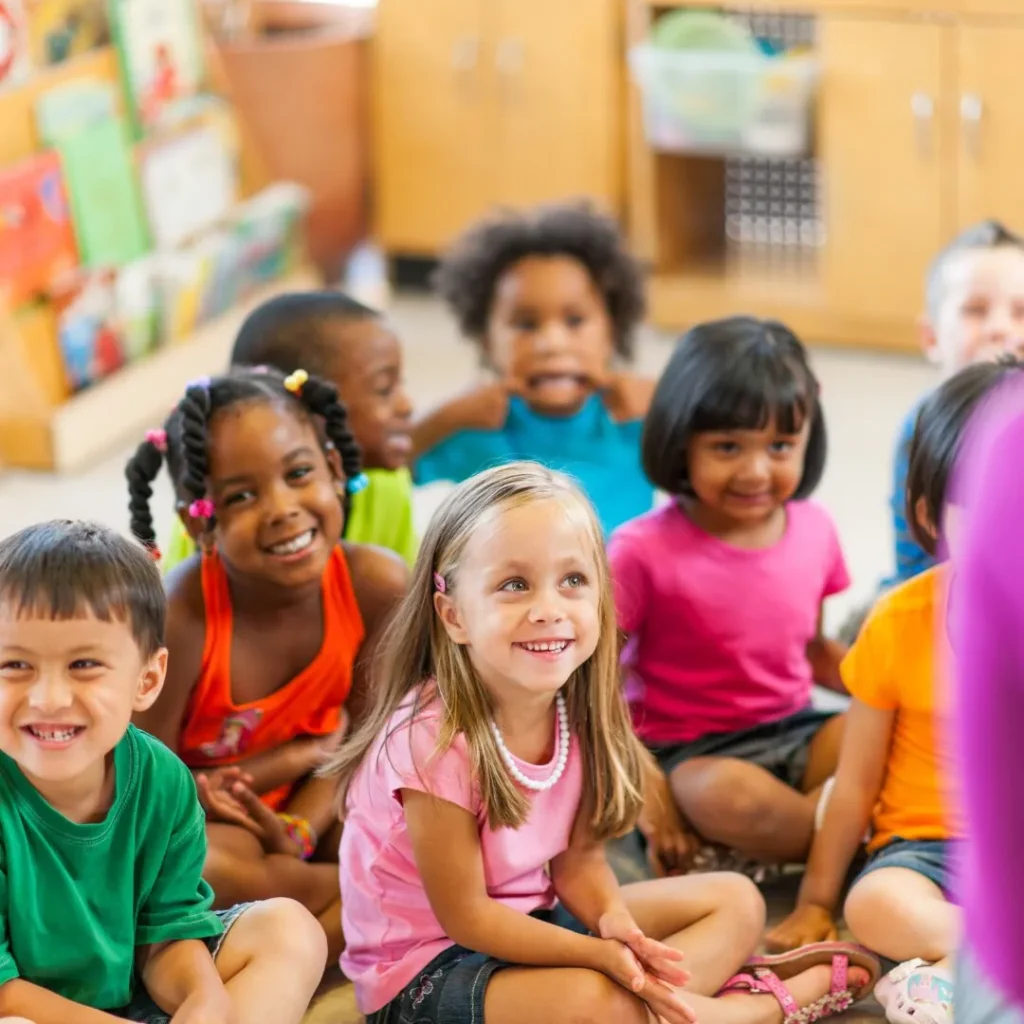
By 30 months, most children use about 50 words, string two or more together with an action word, and start saying “I,” “me” and “we.” They play next to friends and sometimes with them. They also want to do everything themselves, often before their hands and their patience are ready. That gap is where the meltdowns, the grabbing and the “no!” come from.
Add toilet learning, a child who just learned to unzip a jacket, and a group of 3s down the hall waiting for them, and the day needs more than filler. LBP lessons give two-year-olds real choices inside a clear routine, with ideas drawn from our list of age-appropriate activities for 2-year-olds in daycare.
See how a 2s teacher finds the day's activity, reads the choices to offer, and starts, all from a phone.
Scroll through a year of lessons built around independence, conversation, pretend play and early friendships.
Show us how your 2s room runs, and we'll show you where the older toddler lessons fit into it.
Twos need room to try things on their own, words for what they feel, and practice waiting for a turn. Their teachers need lessons that build that in, coaching for the tough moments, and training on guidance that stays warm and firm. Here is how each piece works.
Older toddler activities invite children to choose, make a mess, clean it up and talk about what they did. Pretend sequences, simple puzzles and turn-taking games fill the week, with open-ended questions for every child.
A teacher can ask ELBY how this activity builds language, how to stretch it for a child who is ready for more, or how to adapt it for a child with special needs. ELBY answers in the language the teacher types in.
Leading a room of two-year-olds is a skill. LBP includes 49.5 hours of embedded professional development, and Learning Beyond University offers courses on emotional support and classroom organization in English and Spanish.
Each lesson builds in simple choices, like which color or which job, so teachers offer them on purpose instead of in the middle of a standoff.
Teachers record new sentences, pretend play and turn-taking in LBP's observation tools, and ELBY can point out the skills a child showed during an activity.
Families get the day's activity and at-home tips in English or Spanish, so a feelings word or a self-help skill gets practiced at home too.
When a child turns three, the preschool room runs on the same platform and the same yearly school-wide subscription, so teachers on both sides of the move share one curriculum.
Every classroom gets access at once, so the 2s team can start on day one alongside the rest of the center.
On a phone or tablet, the teacher reads the setup, picks the two choices to offer, and checks ELBY for a way to stretch the activity for the child who always finishes first.
Toilet learning follows each child, not the calendar. ZERO TO THREE’s toilet learning guide notes that most children learn between ages 2 and 4, and that accidents deserve calm, not punishment. Your program and each family set the approach. Older toddler lessons build the independence around it, like cleaning up after themselves, and ELBY can suggest at-home ideas to share with families.
Stay close, stay calm, and keep the limit. Twos often don’t have the words yet for what they feel. A child mid-meltdown can’t take in a lesson, so calming comes first and the talk comes later. Our social-emotional learning activities for toddlers include calm-down corners children choose, bubble breathing and feelings books.
That is part of the point. By three, most children can hold a short back-and-forth conversation, join other children in play and put on some clothes. The older toddler year builds toward those skills. When children move up, LBP’s preschool curriculum for three-year-olds picks up on the same platform, with quarterly benchmarks.
They plan for it. Older toddler lessons give children real choices, simple jobs and time to try, so “me do it” has somewhere to go. When a choice leads to a spill or a tumble, teachers use logical consequences and supportive guidance, like handing over a sponge, rather than taking the task away. Children get the practice and the pride of “Look at me!”
By 30 months, most children say about 50 words and combine two or more with an action word, according to the CDC milestones at 30 months. Lessons use open-ended questions, pretend play and books to stretch “doggie run” into longer talk. ELBY offers CLASS® language modeling ideas for the activity in front of the teacher.
Not quite yet, and that is fine. True sharing comes later. Under three, supported turn-taking is the realistic goal, and twos play next to each other more often than together. LBP’s toddler social-emotional ideas include rolling a ball back and forth, sand timer turns and two-child helper jobs, so waiting becomes a skill children practice, not a fight.
Yes. Feeding a doll with a block is a milestone most children reach by 30 months, and the Head Start ELOF lists “Imitation and Symbolic Representation and Play” as part of Cognition for infants and toddlers. Lessons use pretend sequences in the dramatic play corner to build language, problem-solving and early friendships, with prompts teachers can use to join in.
Yes. LBP is a digital, cloud-based platform that opens in any web browser: classroom tablets, phones, laptops or desktops, with nothing to install. A tablet can stay open near the dramatic play corner, and a phone works on the playground. There is nothing to print unless you want to.
It is part of one yearly, school-wide subscription that covers infants through pre-k, so the 2s room adds no separate charge. There are no per-teacher fees, and ELBY, the 49.5 hours of professional development and Spanish content come with it. Start with a free 30-day trial for the whole center and decide after you have seen it in your room.
Everything. Lessons, @Home Connection notes and family tips are available in English and Spanish at no extra cost. If a teacher types a question to ELBY in Spanish, or another language, ELBY answers in that language, which helps when explaining a new feelings word or a toileting step to a family.
Sensory, language, and attachment-focused lessons for ages 0–12 months.
Independence, early language, and mobility activities for ages 12–24 months.
Creativity, communication, and social growth for ages 24–36 months.
Standards-aligned, play-based lessons for children ages 3–4 years.
Kindergarten readiness and school-preparedness for children ages 4–5 years.

Center Director, Pirates Den Daycare

Two-year-old lessons map to your state's toddler standards and the Head Start ELOF, which helps at licensing time.

Try a month of older toddler lessons with your own 2s before you subscribe.

Single-site centers and multi-location groups in all 50 states run their 2s rooms on LBP.
Curriculum by state
Every state and Washington, DC has its own page naming the early learning standards our lessons are mapped to. Pick yours on the map.
Full access, including your 2s room.
See the older toddler lessons with our team.
Infant through pre-k, one school-wide subscription.