


Every classroom in your West Virginia program, infants through pre-K, gets the full curriculum as soon as you register.

Your West Virginia contact
West Virginia Director of Business Development and Partnerships
Amanda first fell in love with early childhood education while working hands-on with young learners in classrooms across West Virginia. Amanda also supports family child care programs running mixed-age groups across the state. Today, she channels that passion into supporting educators every step of the way as they implement the Learning Beyond curriculum and uphold CLASS, WV ELSF IT and ELSF standards.

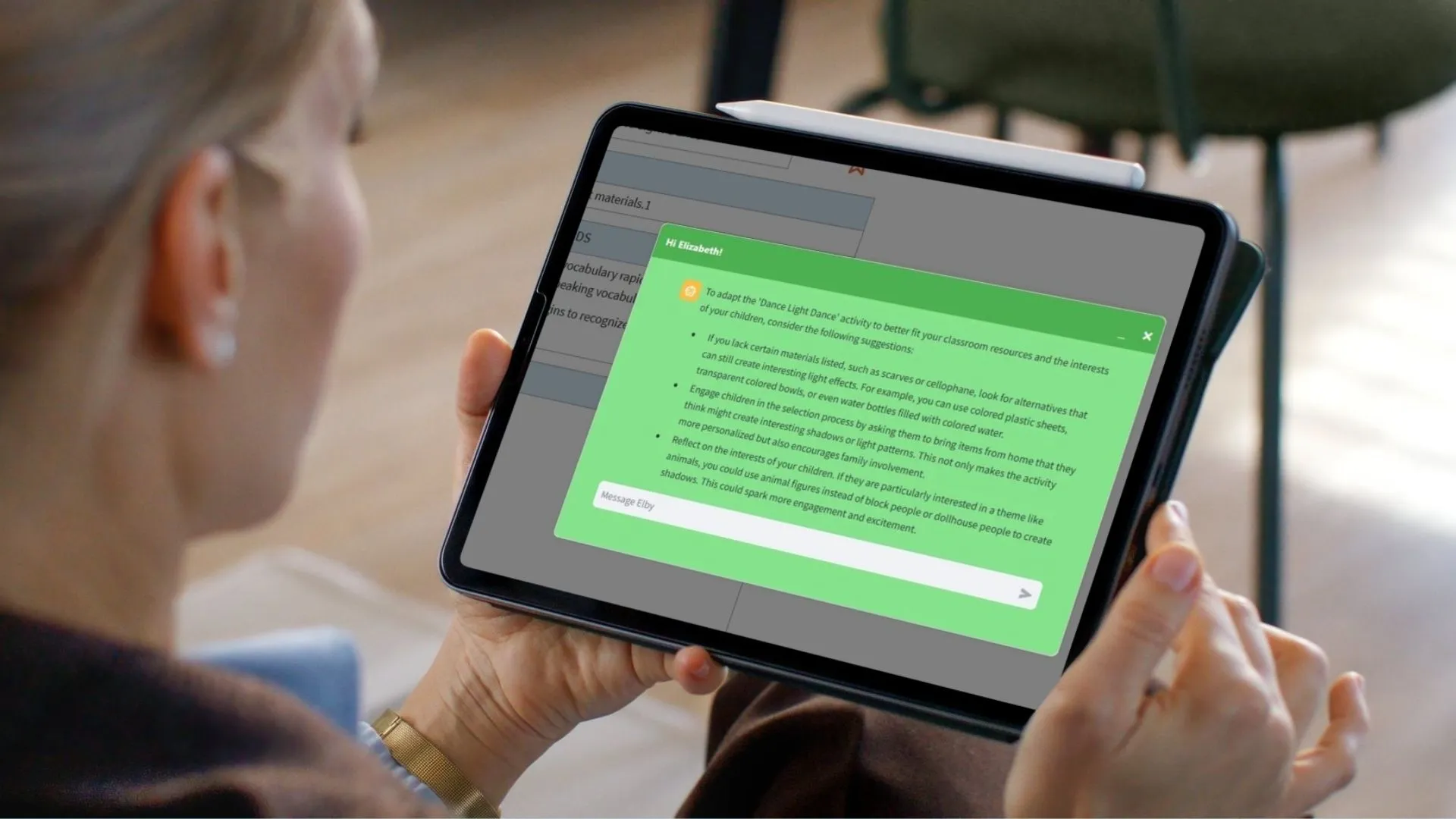
Watch a teacher open today's plan and ELBY's tip on a phone, then move straight into the activity with nothing printed.
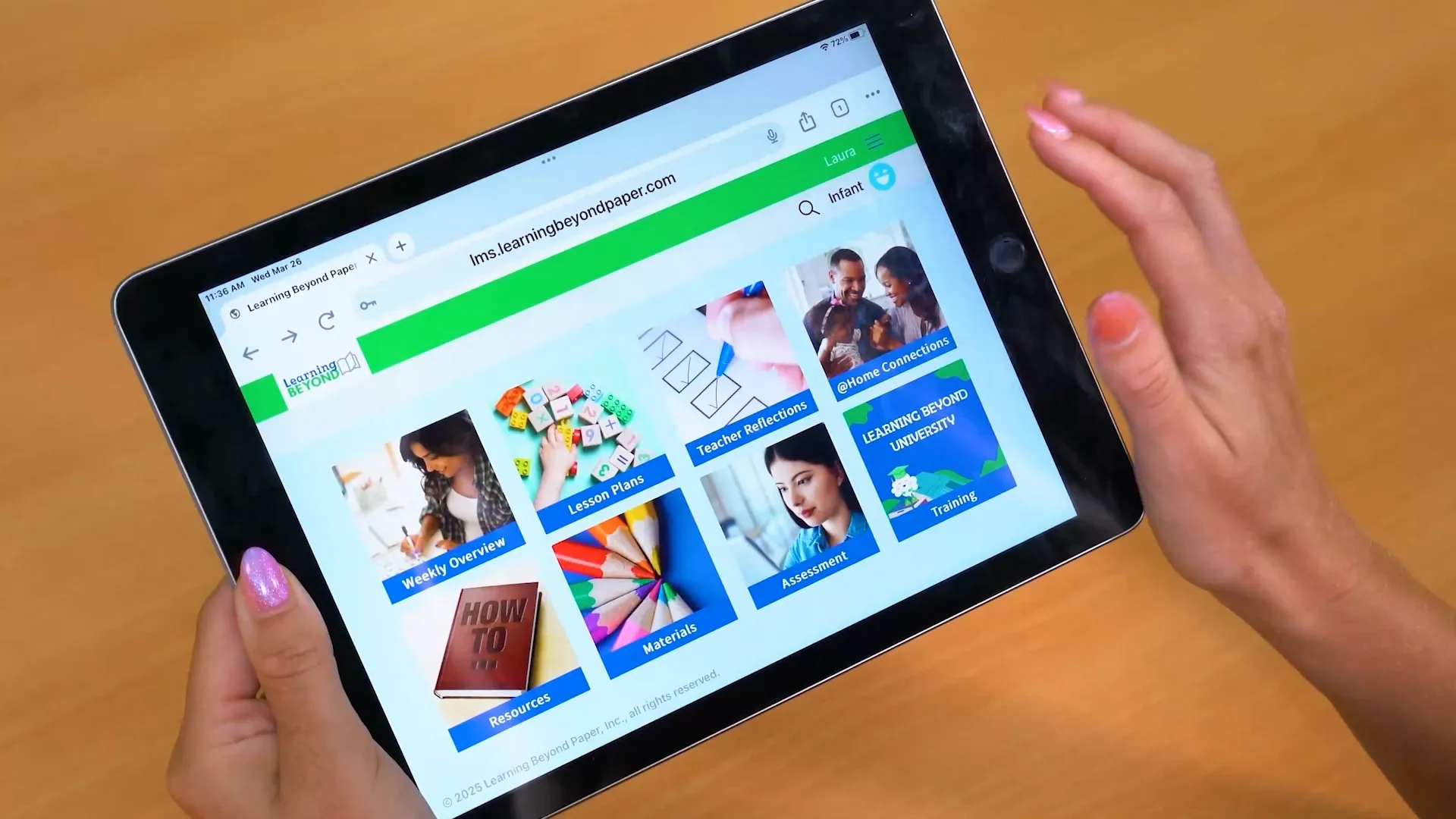
Browse 52 weeks of lessons across five age groups, from infants to pre-K, with West Virginia alignment documents to match.
Talk with us about your license or registration, your tier and any Universal Pre-K partnership, and see how LBP fits your West Virginia program.
Learning Beyond Paper is the only all-in-one early childhood curriculum with a virtual instructional coach built in. West Virginia programs get a year of lesson plans for five age groups, English and Spanish content, an observational assessment tool and 49.5 hours of on-demand professional learning, all for one price.
West Virginia uses two documents: the Early Learning Standards Framework for infants and toddlers, and the West Virginia Pre-K Standards for ages 3 to 5. LBP's West Virginia alignment documents map infant and toddler lessons to the first, and preschool and pre-K lessons to the second, so each room plans against the right standards.
Inside each lesson, ELBY tells teachers how to scale an activity down for a child who needs support, how to extend it for a child who is ready, and what developmental progress to look for.
A new West Virginia hire can lead a lesson on their first day with ELBY's guidance, and LBP University's 49.5 hours of on-demand professional learning are included for when they have time to go deeper.
Tier II status is renewed every year, and licensing reviews look at what children do all day. With LBP, each classroom works from a written plan backed by LBP's West Virginia alignment documents, and teachers log observations as they go.
West Virginia requires 15 hours of approved training a year for qualified staff, and the first-year hours can take months to complete. ELBY coaches new hires inside each activity, so the lesson holds together on day one.
Every subscription includes Spanish and English activity descriptions and family materials, so programs serving Spanish-speaking families don't need a second product.
One yearly subscription covers every classroom in a West Virginia center or family child care program, infant through pre-K, with one login and no per-teacher fees.
Every classroom in your West Virginia program, infants through pre-K, gets the full curriculum as soon as you register.

A teacher logs in, chooses this week's plan for their age group, reads the activity setup and ELBY's coaching tip, and begins. No binders on a shelf and no copies to make.
LBP’s West Virginia alignment documents map infant and toddler lessons to the West Virginia Early Learning Standards Framework for infants and toddlers, and preschool and pre-K lessons to the West Virginia Pre-K Standards for ages 3 to 5. Every age group is also aligned to the Head Start ELOF. Open the West Virginia documents on our curriculum alignments page, and see how lessons are built on our curriculum page.
West Virginia rewards quality through the Tiered Reimbursement System: Tier I for licensed or registered programs, Tier II for programs meeting state quality standards, and Tier III for nationally accredited programs. Tier II is renewed every year with the Division of Early Care and Education and includes Environment Rating Scale self-assessments for each age group. LBP is aligned to ITERS/ECERS and gives every room a documented plan. It supports that work; tier decisions stay with the state.
The West Virginia Department of Human Services licenses centers and facilities through its Division of Early Care and Education, part of the Bureau for Family Assistance; family child care homes are registered. Centers follow the Child Care Centers Licensing rule (78CSR1). LBP doesn’t replace your licensing file, but it gives every group a written daily plan matched to their ages, which makes your program easier to explain at a review.
WV Universal Pre-K is offered in all 55 counties and served 66% of 4-year-olds in 2024-25 (NIEER). From the 2025-26 adoption cycle, county teams adopt a comprehensive curriculum using state criteria, and there is no longer a state-approved list, so the decision sits with your county’s pre-K team. LBP’s pre-K lessons are mapped to the West Virginia Pre-K Standards, and we’re glad to walk your county team through the materials.
Yes. Child Care Assistance helps eligible working or studying parents pay for licensed or certified care, and it runs through the statewide network of Child Care Resource and Referral (CCR&R) agencies. It doesn’t specify a curriculum. Programs seeking Tier II or III need a provider service agreement with their local CCR&R, and the six CCR&R agencies also offer training. LBP adds a full daily curriculum across the program with one yearly subscription.
Qualified staff in West Virginia centers must complete at least 15 hours of approved training each year and apply for credentialing on the WV STARS Career Pathway; staff in rooms for children 24 months and under also need 40 hours of infant/toddler training. Every subscription includes LBP University, 49.5 hours of on-demand professional learning. We don’t claim it counts as approved training for WV STARS, so check before logging hours.
One yearly subscription covers every classroom in your program, from infants to pre-K. ELBY, LBP University, the observational assessment tool, family engagement features and English and Spanish content are included, with no per-teacher or per-classroom fees. Materials kits are available through Lakeshore Learning, and our team offers grant-writing support to customers.
Yes. Activity descriptions and family engagement materials come in English and Spanish at no extra charge. For West Virginia programs that enroll Spanish-speaking families, a teacher can share the same activity with a parent in their home language and invite them to try it at home, without buying a separate bilingual product.
Sign up for a 30-day free trial. Every classroom in your West Virginia program gets full access immediately, so you can test LBP in an infant room, a mixed-age family child care group and a pre-K room at the same time. If you’d like a guided look first, book a demo and tell us whether you’re working toward Tier II or partnering with your county on pre-K.
Yes. West Virginia regulates both family child care facilities and family child care homes. If you care for mixed ages, LBP’s five age bands let one provider plan for an infant and a preschooler on the same day; see our family child care page. Head Start partners can use the same platform, and our Head Start page explains the ELOF alignment.
Sensory, language, and attachment-focused lessons for ages 0–12 months.
Independence, early language, and mobility activities for ages 12–24 months.
Creativity, communication, and social growth for ages 24–36 months.
Standards-aligned, play-based lessons for children ages 3–4 years.
Kindergarten readiness and school-preparedness for children ages 4–5 years.

Center Director, Pirates Den Daycare
Infant and toddler lessons map to the WV Early Learning Standards Framework and pre-K lessons to the WV Pre-K Standards, so every room plans against the right document.

Every classroom in your West Virginia program gets full access from day one. Decide when you're ready.

Early learning programs across the country plan and teach with Learning Beyond Paper every day.
Full access for every West Virginia classroom from day one.
See LBP live, set up for your West Virginia program.
Infant through pre-k — one platform, one price, complete coverage.