Begin a free 30-day trial
Every room in the school opens on day one, including Pre-K, so lead teachers can plan side by side with the director.

By the end of Pre-K, children are working toward a long list. The CDC milestones by 5 years include recognizing simple rhymes, counting to 10, naming some letters, writing some letters in their name, and paying attention for 5 to 10 minutes.
Pre-K is also where accountability is heaviest. Head Start programs must assess each child’s progress often enough to individualize teaching and must plan the move to kindergarten with families and schools. Pre-K teachers have to teach phonological awareness and early writing through play while collecting evidence of what each child can do. LBP plans the instruction and builds observation into it. See our CLASS assessment strategies for preschool teachers.





Watch a Pre-K teacher open a rhyme game, the ELBY tip that goes with it, and the observation note that follows.
Browse 52 weeks of Pre-K 4 lessons in reading foundations, early writing, number sense, STEAM, and self-regulation.
See how Pre-K lessons, observation tools, and family updates would work in your program's kindergarten run-up.
Each Pre-K day comes with clear objectives, the open-ended questions to ask, and ways to scaffold a skill up or down. One yearly school-wide subscription brings 52 weeks of lessons, 4,000+ activities across the age groups, ELBY coaching, and 49.5 hours of professional learning, in English and Spanish.

Literacy follows the four Science of Reading strands LBP teaches: oral language and vocabulary, phonological awareness, alphabet knowledge, and comprehension and storytelling. Children also write for real reasons, count and compare quantities, and practice the planning and patience kindergarten asks for.

When a four-year-old breezes through a rhyme game, ELBY suggests a harder version. When another child is still finding the first sound, it offers a smaller step. ELBY also shows which skills your assessment tool covers, so teachers can adapt lessons for the children being assessed.

Pre-K teaching asks for more: explicit sound and letter work inside play, careful observation, and honest conversations with families about readiness. LBP's 49.5 hours of embedded professional development walk teachers through each, with CLASS®-aligned courses in English and Spanish.


Teachers know which sound, letter, or story skill each activity targets, so rhyme games and read-alouds become planned instruction, not filler between transitions.
Observation tools let teachers capture what a child said, wrote, or counted during the lesson, which helps at checkpoints, family conferences, and monitoring visits.
Daily updates and at-home ideas show families what their child is practicing, so the readiness conversation starts early in the year rather than in the final weeks.
Following multi-step directions, waiting for a turn in a game, and finishing a task are built into lessons, so children practice the self-control kindergarten relies on.
Every room in the school opens on day one, including Pre-K, so lead teachers can plan side by side with the director.
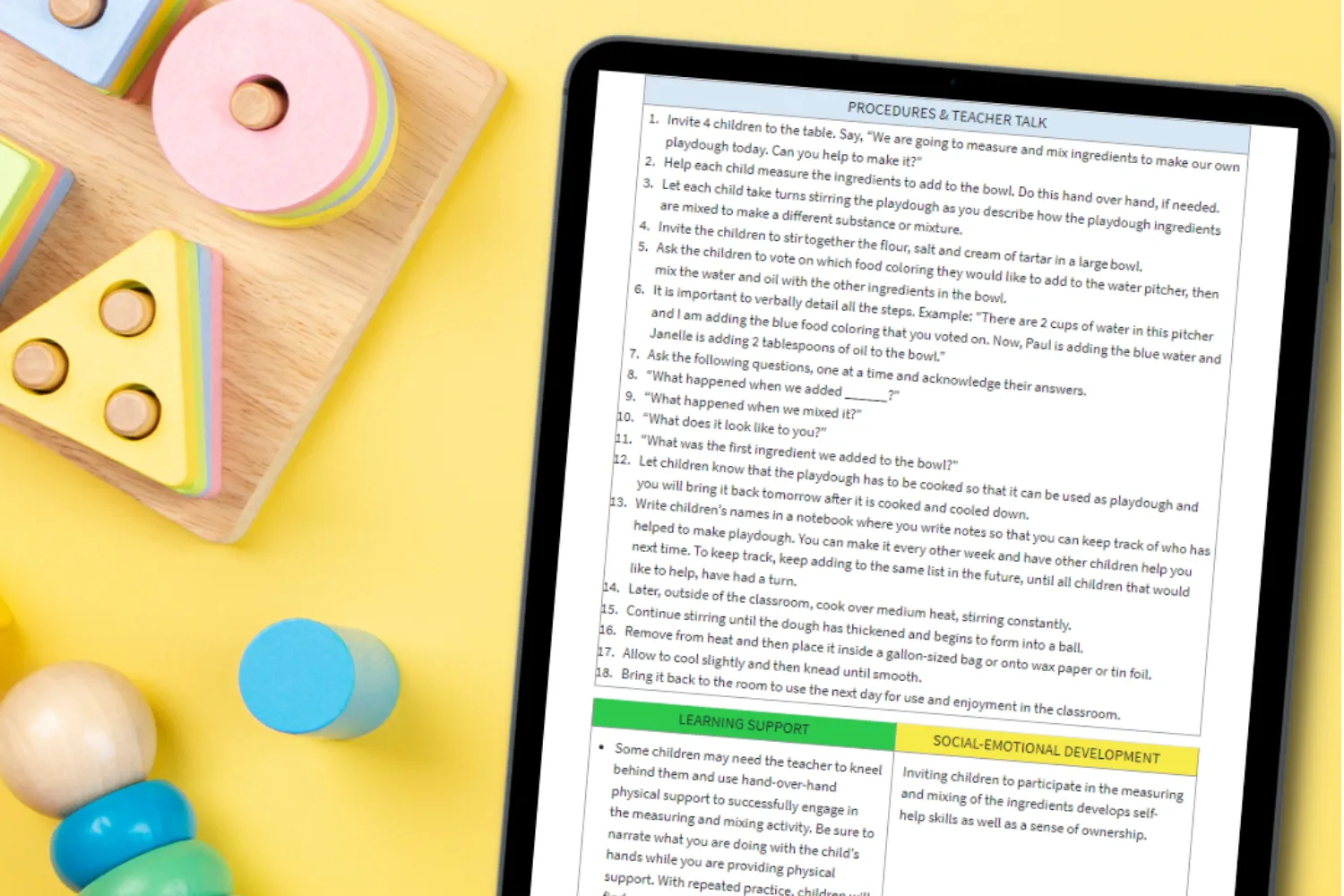
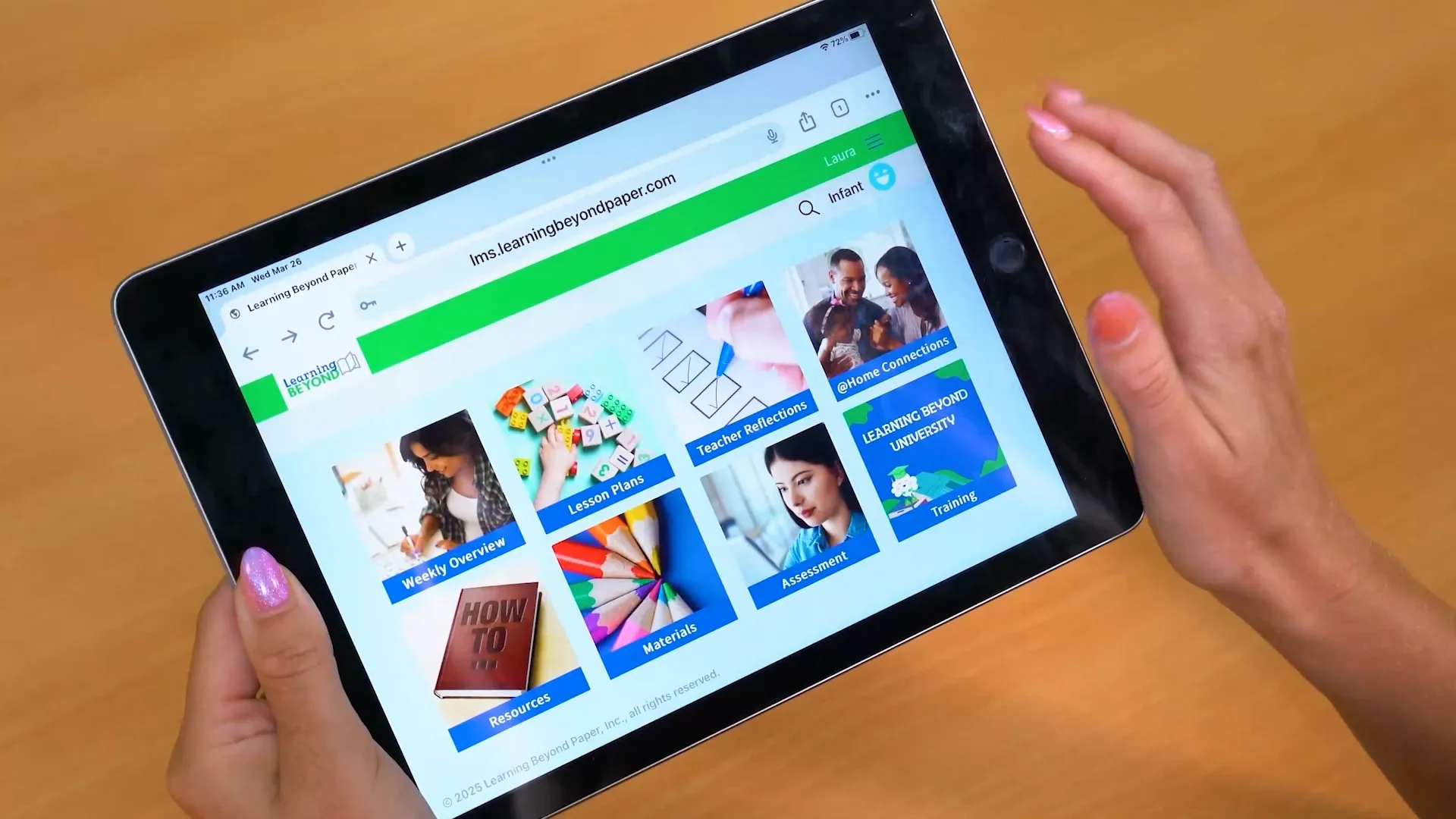
A Pre-K teacher opens the lesson on a tablet, reads the objective, and finds the rhyme or letter game, the questions to ask, and ELBY's tip for children who are ahead or still building the skill.
LBP’s literacy approach is grounded in the Science of Reading and taught through play-based language experiences. Pre-K lessons work on four strands: oral language and vocabulary, phonological awareness, alphabet knowledge, and comprehension and storytelling. The Head Start Early Learning Outcomes Framework also treats language and literacy as separate preschool domains, with sub-domains such as Phonological Awareness, Print and Alphabet Knowledge, and Writing.
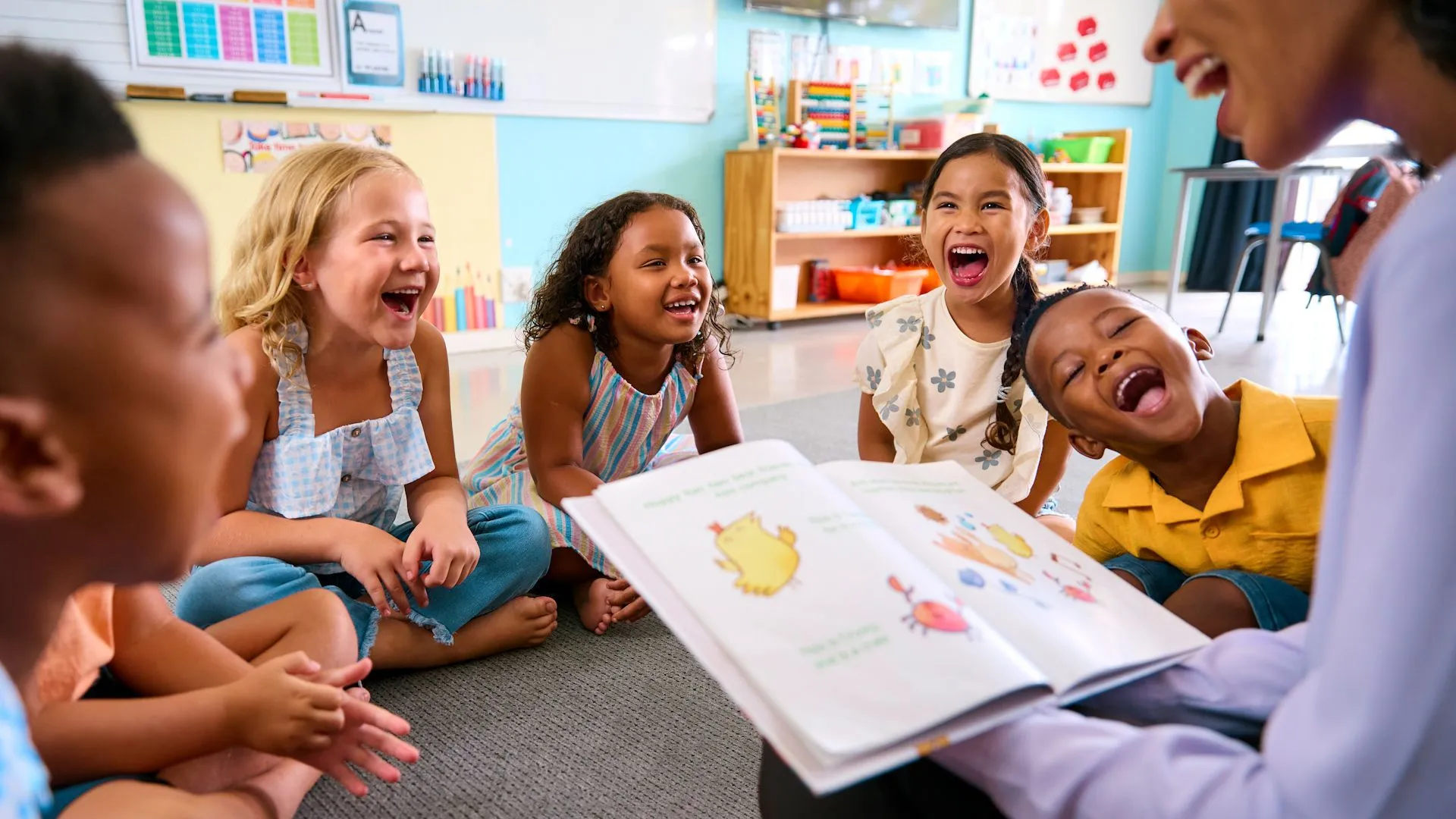
Short, playful, and frequent. Between 48 and 60 months, the ELOF expects children to pick out rhyming words from a group such as hat, cat, and log, and to start counting syllables and hearing sounds inside words. By 60 months, children work toward saying the first sound in a word, like /d/ in dog. LBP teaches these skills through songs and rhyme games, and when a child is ready for a harder rhyme game, ELBY suggests the next step.
Most four-year-olds are already writing in their own way. The ELOF describes children 48 to 60 months using drawings, scribbles, letter-like forms, and letters to share meaning, sometimes with invented spelling like B for bug. By 60 months, children write their first name correctly or close to it. LBP’s Pre-K lessons connect growing language to early writing, so children write for real purposes, such as signing their work or labeling a drawing.
LBP’s observation tools let teachers note what children say, write, and do during play and lessons, then use those notes to plan next steps and share progress with families. ELBY helps teachers see which domains and skills your assessment tool measures and adapt lessons for the children being assessed. LBP lists alignment to Teaching Strategies GOLD® objectives. It supports your assessment system; it does not replace it. See our curriculum alignments.
LBP was created using the Head Start ELOF and is aligned to all 50 states’ early learning standards and CLASS®. Head Start programs must assess children often enough to individualize teaching and must plan kindergarten transitions with families and schools; LBP’s observation tools, family updates, and alignment help document that work. For state pre-K, check your program’s own rules on approved curricula. Read more about LBP for Head Start and Early Head Start.
In two places. In the classroom, Pre-K lessons are built around the skills kindergarten teachers and school readiness assessments look for, from letter knowledge to following multi-step directions. At home, @Home Connection newsletters show families what their child is doing each day, with tips to extend it, and ELBY helps teachers share activities and at-home ideas. Parents get a clear picture of progress before the first day of school, which Head Start transition rules also ask programs to provide.
The ELOF groups executive function under cognitive self-regulation: controlling impulses, sustaining attention, holding information in mind, and thinking flexibly. In a Pre-K room, that looks like freeze games, remembering a three-step direction, waiting for a turn in a board game, and adjusting when the rules change. CDC milestones by age 5 include following rules or taking turns in games. LBP lessons build these into play.
Yes. LBP’s lessons, training, and resources come in English and Spanish at no extra cost, which helps in Pre-K rooms with dual-language learners building vocabulary in two languages. ELBY replies in the language a teacher types in and can help teachers connect with multilingual families, so readiness conversations reach parents in a language they are comfortable with.
A yearly school-wide subscription covers every Pre-K classroom and every other room in your school, from infants up, with no per-teacher fees. It includes 52 weeks of lessons, more than 4,000 activities across the age groups, ELBY coaching, 49.5 hours of embedded professional development, observation tools, and Spanish content. Try it free for 30 days, then talk with our team about pricing for your program.
Yes. LBP runs in the cloud and opens in any web browser, so a phone, tablet, laptop, or desktop all work, and there is nothing to install. During small groups, a teacher can keep the lesson and ELBY’s tips on a tablet at the table and add an observation right after a child names a letter or retells a story. Pages can also be printed for families or for a center.

Sensory, language, and attachment-focused lessons for ages 0–12 months.

Independence, early language, and mobility activities for ages 12–24 months.

Creativity, communication, and social growth for ages 24–36 months.

Standards-aligned, play-based lessons for children ages 3–4 years.

Kindergarten readiness and school-preparedness for children ages 4–5 years.

Center Director, Pirates Den Daycare

Pre-K lessons connect to state early learning standards, Head Start ELOF, and CLASS®, which helps your program document readiness.

Run a month of Pre-K lessons in your own rooms before you commit.

Pre-K teams in all 50 states plan their year with Learning Beyond Paper.
Curriculum by state
Every state and Washington, DC has its own page naming the early learning standards our lessons are mapped to. Pick yours on the map.
Your Pre-K teachers can try it right away.
See a Pre-K lesson live with our team.
Infant through Pre-K in one yearly school-wide subscription.