
CLASS observations feed straight into the Designation Renewal System, and a few points can decide where your program lands. Here’s the reassuring part for directors and coaches: you don’t need a curriculum overhaul to move the numbers. Learning how to improve CLASS scores in your Head Start program usually comes down to small, repeatable changes in how teachers talk with children, run transitions, and receive feedback. It helps to understand how CLASS scores factor into review thresholds before you start coaching.
What CLASS Actually Measures (and Why Scores Stall)
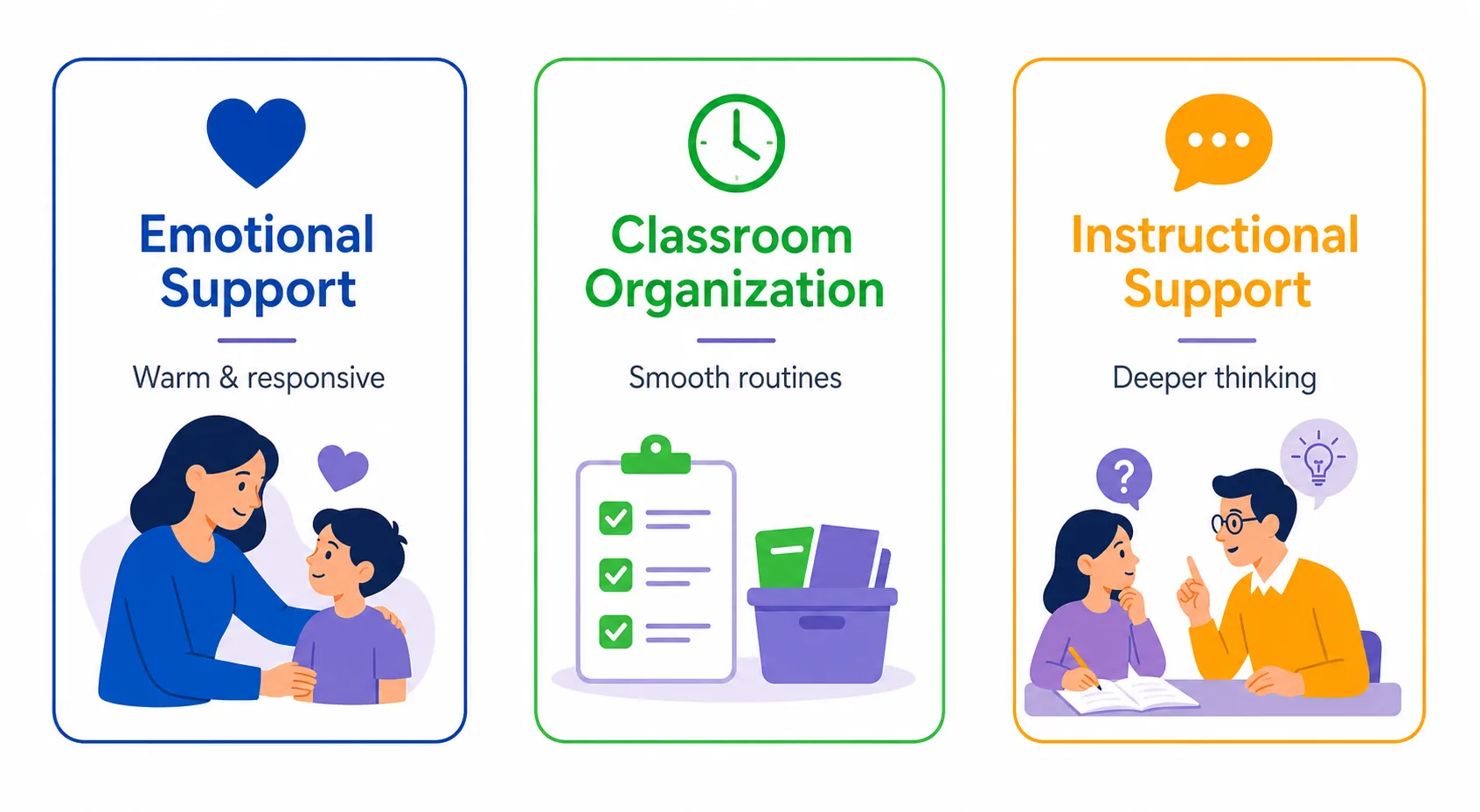
The Classroom Assessment Scoring System looks at three domains. Emotional Support covers warmth and responsiveness. Classroom Organization covers routines, behavior management, and how well time is used. Instructional Support covers the thinking and language teachers pull out of children.
Instructional Support is where nearly every program scores lowest, so that’s where the biggest gains live. Instructional Support, one of the CLASS domains Head Start programs are scored on, is where nearly every program scores lowest, so that’s where the biggest gains live. Head Start’s quality-improvement guidance flags this domain as both the hardest to raise and the most worth targeting.
| CLASS Domain | What an observer looks for | Most common gap |
|---|---|---|
| Emotional Support | Warm tone, responsiveness, following children’s lead | Missed emotional cues during busy moments |
| Classroom Organization | Smooth transitions, clear routines, minimal lost time | Long, unstructured transitions |
| Instructional Support | Open-ended questions, concept development, language modeling | Yes/no questions with no follow-up |
How to Improve CLASS Scores in Your Head Start Program, 7 Practical Shifts

Raise Instructional Support With Better Questioning
The fastest way to lift a score is to change the questions teachers ask. Swap yes/no prompts for “why” and “how,” then add a follow-up: “why do you think that happened?” Concept development and language modeling both live in that exchange. Research on the Head Start REDI program found that intentional, higher-quality interactions produced measurable gains in children’s school readiness.
Tighten Classroom Organization With Predictable Routines
Visual schedules, clearly signaled transitions, and materials prepped before children arrive cut the minutes lost between activities. Less lost time lifts Productivity and Behavior Management without adding to a teacher’s workload.
Strengthen Emotional Support Through Responsive Interactions
Name feelings out loud, follow a child’s lead, and hold a warm tone even during clean-up. Supportive, responsive interactions are consistent predictors of readiness gains, as an ASPE review of Head Start evidence lays out.
Use Real Observation Data to Coach, Not to Grade
How can assessment be improved? Treat CLASS as a coaching cycle, not a report card: observe, debrief, set one micro-goal, then re-observe. Teachers engage far more when a score feels like support instead of a verdict. Research on how teachers perceive high-stakes CLASS use shows that framing shapes buy-in and follow-through.
Teachers engage far more when a score feels like support instead of a verdict.
Make Time for Embedded, Ongoing Professional Development
Low scores usually reflect a coaching or PD gap, not a lack of teacher effort. Programs that build learning into the weekly plan improve faster than those leaning on one annual workshop. Curriculum tools built with support for Early Head Start and Head Start programs keep that development in the daily plan, Learning Beyond Paper folds 49.5 hours of professional development into the subscription, so growth lives where teachers already work.
Give Teachers In-the-Moment Feedback, Not Just Annual Reviews
Here’s the gap most programs can’t staff around: one coach can’t be in every room every day. ELBY, a virtual instructional coach built into the platform, surfaces CLASS-aligned prompts while teachers plan, the daily support layer a single coach can’t cover alone.
Align Curriculum to CLASS Indicators and Head Start ELOF
Lesson plans already mapped to CLASS dimensions and the ELOF take the guesswork out of “what does a high-quality interaction look like today?” Bilingual English and Spanish content, included at no extra cost, also strengthens emotional and language interactions in dual-language rooms.
A Simple 30-Day Plan to Lift CLASS Scores
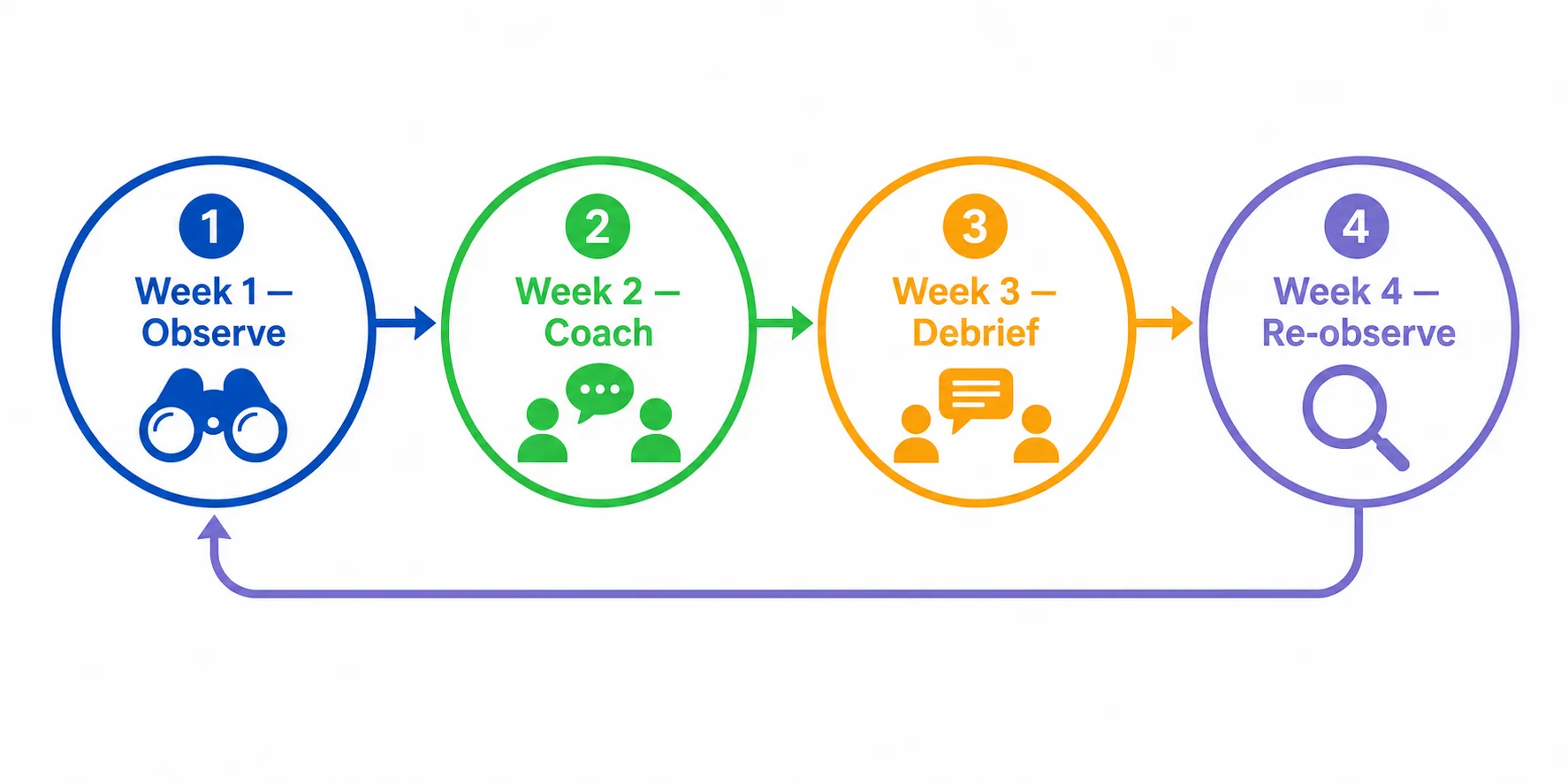
Consistency beats intensity. Continuous quality improvement is the real mechanism, and a four-week cadence makes it repeatable.
| Week | Focus |
|---|---|
| Week 1 | Baseline observation in each classroom |
| Week 2 | Coach one domain, usually Instructional Support |
| Week 3 | Peer or coach debrief; set one micro-goal per teacher |
| Week 4 | Re-observe and document growth |
Quality of interaction, not program funding alone, is what drives child impact, a point Brookings’ review of Head Start research underscores.
Frequently asked questions
What is a good CLASS score for a Head Start program?
How can assessment be improved in Head Start classrooms?
How often should CLASS observations happen?
Can a curriculum help raise CLASS scores?
Key Takeaway
Scores move when interaction quality becomes a daily, coached habit, backed by aligned plans and in-the-moment guidance.