
If you have ever sat at the kitchen table on a Sunday night deciding whether next week should be about apples or feelings, this guide is for you.
Below is a month-by-month calendar of preschool themes, each with a one-line learning focus and a few ready-to-use activities. Use it as written, borrow pieces of it, or hand it to your teaching team as a starting point for the year.
What Preschool Themes Are (and Why They Make Planning Easier)
A preschool theme is a central topic, such as weather, community helpers, or ocean life, that ties together a week or two of learning. Instead of math, literacy, science, and art living in separate boxes, every part of the day connects back to one big idea.
That connection is the point. Themes give children a hook, so activities feel related instead of random.
When a child counts pumpkin seeds in the morning, hears a pumpkin story at circle time, and paints pumpkins in the afternoon, the same words come up again and again.
That repetition supports the vocabulary work at the heart of a language-rich classroom built on the Science of Reading.
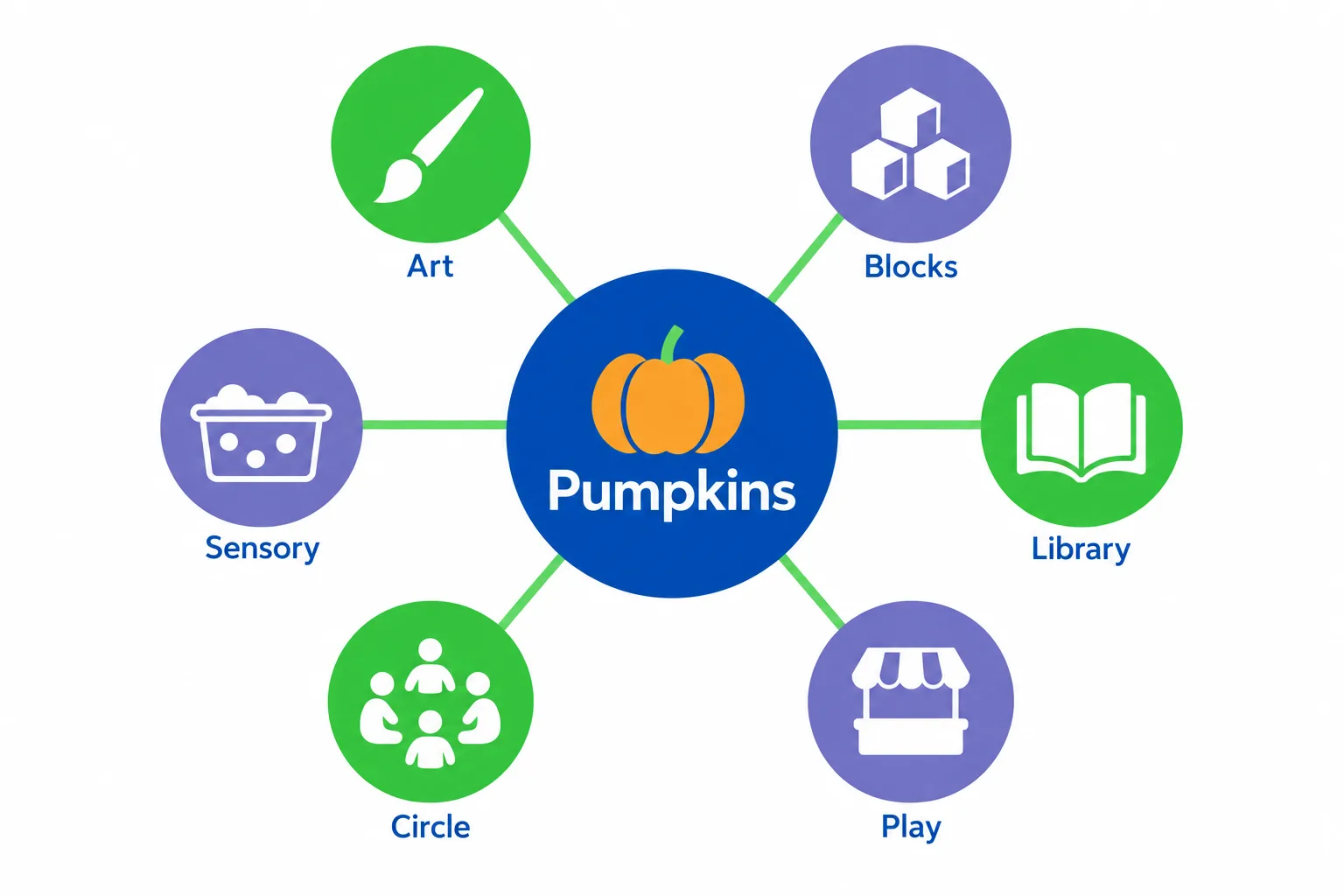
One theme can touch every center in the room:
- Dramatic play: a farm stand, a fire station, a veterinarian’s office
- Blocks: a barn, a bridge, or a neighborhood
- Sensory table: dried corn, water and boats, artificial snow
- Art: collage, painting, and process art tied to the topic
- Library: a rotating basket of fiction and nonfiction theme books
- Circle time: songs, discussion, and a daily question (our guide on choosing the right theme for preschool circle time goes deeper here)
For directors and owners, themes do something else: they keep classrooms consistent. When turnover hits, shared daycare themes mean a new hire or substitute knows what the room is learning this week.
And when each activity maps to a developmental domain, themes become a practical way to show alignment with your state early learning standards and the Head Start Early Learning Outcomes Framework (ELOF).
How to Choose and Pace Themes Across the Year
Weekly or bi-weekly?
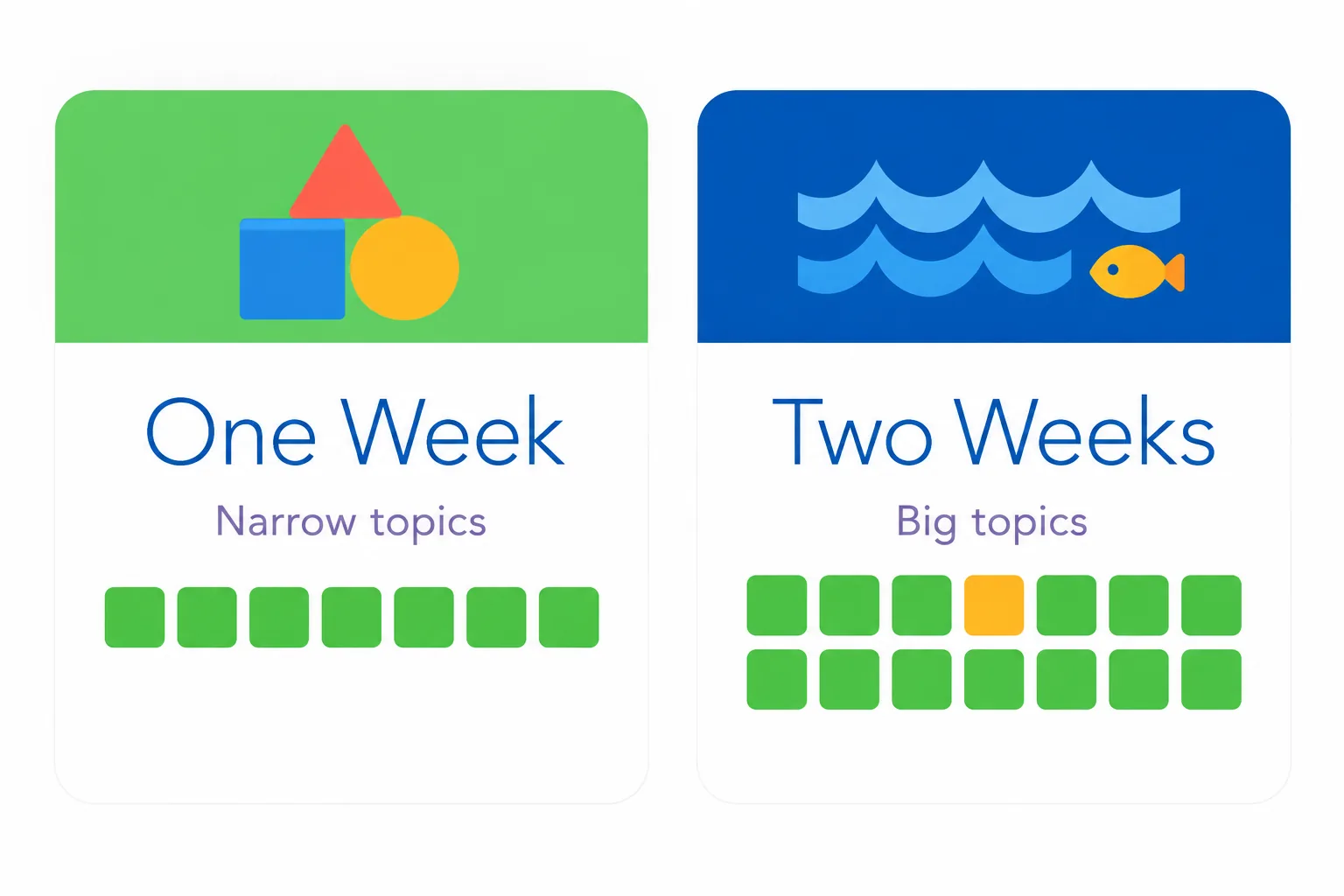
A one-week theme suits narrow topics (Teeth, Shapes, Rainbows). Bigger topics with lots of vocabulary to explore (Farm, Ocean, Plants and Seeds) often deserve two weeks. Toddlers usually do better with longer, slower themes and plenty of repetition.
At my preschool we do broad monthly themes and explore them throughout the month. They have to be somewhat logical to what’s happening during that month, …Read on Reddit ↗
Follow the children.
Seasons and local events make a good backbone, but children’s interests should steer. If your class is fascinated by the construction site across the street, extend that theme. If a theme is falling flat by Wednesday, wrap it up early.
Keep it concrete.
Developmentally appropriate themes stay close to children’s lived experience: their bodies, families, neighborhood, weather, food, and animals. Abstract topics land better when children can touch, see, and try something real.
Plan inclusive celebrations.
Holiday and cultural themes work best when they reflect the families actually in your program. Invite families to share traditions instead of assuming everyone celebrates the same days.
Map the year first.
Sketch all twelve months before writing a single weekly plan. You can order materials once, prepare family newsletters ahead, and skip the last-minute scramble.
Your Full-Year Preschool Theme Calendar at a Glance
This monthly list of preschool themes runs in school-year order, August through July, so you can start wherever your year begins. Every month below includes daycare activities you can use as written or adapt for toddlers and Pre-K 4.
Planning preschool themes by month gives you three to four themes for every month, each with one clear learning focus.
| Month | Themes | Learning Focus |
|---|---|---|
| August | Welcome to School, All About Me, Classroom Routines | Separation, belonging, name recognition, routines |
| September | My Family and Home, Apples, Feelings and Friends, My Five Senses | Family structures, counting, naming emotions, observation |
| October | Pumpkins, Leaves and Trees, Fire Safety, Spiders and Bats | Measurement, seasonal change, safety, animal traits |
| November | Farm Animals, Gratitude and Giving, Harvest and Food, Community Helpers | Animal products, gratitude, healthy foods, helpers |
| December | Gingerbread, Celebrations Around the World, Light and Shadow, Kindness | Retelling, cultural awareness, light, prosocial skills |
| January | Winter Weather and Snow, Arctic Animals, Healthy Habits, New Beginnings | States of matter, adaptations, self-care, goals |
| February | Friendship, Teeth and Dental Health, Community Helpers Part 2, Shapes | Cooperation, health routines, roles, geometry words |
| March | Weather and Wind, Rainbows and Colors, Books and Reading, Our Neighborhood | Recording weather, color mixing, print awareness, places |
| April | Plants and Seeds, Earth Day and Recycling, Rain and Puddles, Eggs and Hatching | Life cycles, caring for Earth, absorption, prediction |
| May | Bugs and Insects, Butterflies, Gardening, Caregivers We Love | Classification, metamorphosis, responsibility, appreciation |
| June | Ocean and Beach, Sun and Water Play, Transportation, Ready for Kindergarten | Sink and float, sun safety, comparing, transitions |
| July | Camping and Outdoors, Space and Stars, Dinosaurs, Picnic Foods | Nature, day and night, fossils, following recipes |
August Preschool Themes

Welcome to School (focus: separation and feeling safe)
- Classroom scavenger hunt with picture cards of the cubbies, sink, and book corner
- Goodbye routine practice with puppets
All About Me (focus: name recognition and identity)
- Name puzzles cut from cardstock
- Self-portraits drawn while looking in a mirror
- A class graph of eye color or favorite fruit
Classroom Routines (focus: predictability)
- A photo visual schedule children help arrange
- Clean-up song races with a sand timer
September Preschool Themes
My Family and Home (focus: every family looks different)
- Family photo wall with a sentence from each child
- Build-my-house block challenge
Apples (focus: counting and life cycles)
- Apple taste-test graph: red, green, or yellow
- Count apple seeds and sort by number
- Apple tree life-cycle sequencing cards
Feelings and Friends (focus: naming emotions)
- Daily feelings check-in chart
- Emotion face matching with photos
My Five Senses (focus: observation)
- Mystery sensory bags
- Sound-matching shaker bottles
October Preschool Themes
Pumpkins (focus: measurement and estimation)
- Weigh and measure pumpkins with string and a scale
- Guess, then count, how many seeds are inside
Leaves and Trees (focus: seasonal change)
- Sort leaves by color and size
- Leaf rubbings with crayons
- Nature walk with a collection bag
Fire Safety (focus: safety routines)
- Stop, drop, and roll practice
- Firefighter dramatic play center
Spiders and Bats (focus: animal characteristics)
- Yarn web fine-motor challenge on a laundry basket
- Count spider legs and compare with insects
November Preschool Themes
Farm Animals (focus: animals and what they give us)
- Farm small-world play in the block area
- Match animal to product (cow to milk, hen to egg)
Gratitude and Giving (focus: gratitude)
- Class gratitude tree with paper leaves
- Thank-you cards for school staff
Harvest and Food (focus: healthy food choices)
- Play grocery store with empty boxes and play money
- Sort foods into everyday and sometimes foods
Community Helpers Part 1 (focus: people who help us)
- Helper dress-up center
- Invite a family member to talk about their job
December Preschool Themes
Gingerbread (focus: retelling stories)
- Story sequencing cards
- Compare two versions of the story on a chart
Celebrations Around the World (focus: cultural awareness)
- Families share a tradition, food, or song
- Music and movement from different cultures
Light and Shadow (focus: early science of light)
- Flashlight shadow play on a sheet
- Trace a toy’s shadow at different times of day
Giving and Kindness (focus: prosocial behavior)
- Kindness chain: add a link for each kind act
- Make a class gift for a neighbor or helper
January Preschool Themes
Winter Weather and Snow (focus: states of matter)
- Melting ice experiment: where does it melt fastest?
- Snow or ice in the sensory table with mittens
Arctic Animals and Penguins (focus: animal adaptations)
- Blubber glove test with shortening in a bag and ice water
- Penguin waddle relay
Healthy Habits (focus: hygiene and self-care)
- Handwashing glitter demo
- Healthy plate collage
New Beginnings (focus: goal-setting at a child’s level)
- I Can Do It chart for skills like zipping coats
- Then-and-now photos from the start of the year
February Preschool Themes
Friendship and Valentine’s Day (focus: cooperation)
- Friendship card exchange
- Partner block-building challenge
Teeth and Dental Health (focus: health routines)
- Egg-in-soda experiment to see staining
- Practice brushing on a large model
Community Helpers Part 2 (focus: community roles)
- Mail carrier dramatic play with real envelopes
- Helper tool sort
Shapes All Around (focus: geometry vocabulary)
- Shape hunt walk around the building
- Build shapes with craft sticks and play dough
March Preschool Themes
Weather and Wind (focus: observing and recording)
- Class weather chart updated daily
- Pinwheels and wind socks outdoors
Rainbows and Colors (focus: color mixing)
- Color-mixing droppers on coffee filters
- Rainbow color sort in the sensory bin
Books and Reading Week (focus: print awareness)
- Author study corner
- A class book with one page per child
Our Neighborhood (focus: local places)
- Block-build a neighborhood map
- Photo walk of nearby buildings
March is also when many programs start planning next year’s curriculum and budget, which makes it a good month to ask how much time your team spends building themes, and whether there’s a better way (more on that below).
April Preschool Themes
Plants and Seeds (focus: life cycles)
- Seed-in-a-bag window garden
- Measure plant growth with cubes each week
Earth Day and Recycling (focus: caring for the environment)
- Recycling sort game
- Sculptures from clean recyclables
Rain and Puddles (focus: water and absorption)
- Absorbency test with sponges, paper, and fabric
- Puddle jumping and puddle measuring
Eggs and Hatching (focus: prediction)
- Prediction chart: what animal will hatch?
- Plastic egg number matching
May Preschool Themes
Bugs and Insects (focus: classification)
- Magnifying glass bug hunt
- Sort bugs by number of legs or wings
Butterflies and Life Cycles (focus: metamorphosis)
- Life-cycle sequencing cards
- Symmetry butterfly painting
Gardening (focus: responsibility)
- Class garden jobs chart
- Plant herbs in recycled containers
Caregivers We Love (focus: family appreciation)
- Caregiver interview drawings
- Invite families for a morning story time
June Preschool Themes
Ocean and Beach Life (focus: sink and float)
- Sink-or-float tub with a prediction chart
- Sand table with shells and sorting cups
Sun and Water Play (focus: sun safety)
- Sun-safety sort (hat, sunscreen, snow boots?)
- Paint the fence with water and watch it dry
Transportation (focus: comparing and counting)
- Toy car ramp races at different heights
- Graph how each child gets to school
Getting Ready for Kindergarten (focus: transition readiness)
- Pretend kindergarten classroom in dramatic play
- Practice opening lunch containers independently
July Preschool Themes
Camping and Outdoors (focus: nature exploration)
- Indoor tent reading nook with flashlights
- Nature scavenger hunt
Space and Stars (focus: day and night)
- Constellation light boards made with pushpins
- Sort day and night pictures
Dinosaurs (focus: fossils and big vocabulary words)
- Fossil dig in sand
- Measure a dinosaur’s length with yarn in the hallway
Picnic and Summer Foods (focus: following recipes)
- No-cook picnic snack with a picture recipe
- Teddy bear picnic counting game
Summer and mixed-age programs often see attendance swing week to week. Keep July themes flexible and lean on open-ended activities that work for a three-year-old and a five-year-old side by side.
If your center also runs a school-age summer or afterschool program, Learning Beyond the Bell brings the same planned approach to K through 6.
Unique Preschool Themes to Mix In
When the classics feel stale, these unique preschool themes keep the year fresh:
Related readingBack to School Activities for Preschool: Week 1 PlanRead the guide →| Theme | Learning Focus | Activity |
|---|---|---|
| Inventors and Building | Problem-solving | Build a machine from boxes and tape |
| Music and Instruments | Rhythm and sound | Make shakers and drums |
| Mail and Messages | Writing for a purpose | Set up a classroom post office |
| Opposites | Comparison words | Sort big and small, loud and quiet |
| Restaurants | Menus and math | Take orders in a pretend cafe |
| Construction Zone | Tools and measuring | Use hard hats and block blueprints |
| Colors of Me | Identity and belonging | Mix skin-tone paints for self-portraits |
The best emergent themes come from children’s own questions.
Keep a running list of what they ask about during the week. Those questions are your next theme.
Themed Days Preschoolers Love
Themed days add excitement, and they work best when they connect to the week’s focus instead of standing alone.
| Themed Day | Pair With | In Class | At Home |
|---|---|---|---|
| Pajama Day | Space and Stars | Read nighttime stories | Share a bedtime routine photo |
| Backwards Day | Opposites | Do the day’s routines in reverse order | Try one backwards thing at dinner |
| Color Day | Rainbows | Everyone wears the same color | Go on a color hunt around the house |
| Teddy Bear Picnic | Picnic or Friendship | Count and sort bears | Tell a story about the bear’s day |
| Career Dress-Up Day | Community Helpers | Dress up and act out jobs | Ask a grown-up about their job |
| Silly Hat Day | Shapes or Inventors | Design a hat from recycled materials | Measure family members’ heads with string |
Adapting Themes for Toddlers and 2-Year-Olds
You don’t need a separate calendar for younger rooms. Keep the theme and shrink the activity: more sensory, shorter, more repetition, and lots of hands-on exploration.
Preschool themes for toddlers work best with shorter, more sensory activities and plenty of repetition.
| Theme | 18-Month-Olds | 2-Year-Olds |
|---|---|---|
| Apples | Roll real apples down a ramp; touch and smell apple halves | Stamp with apple halves; sort two colors of apples |
| Weather | Shake a rain stick; splash in a shallow water tray | Put on and take off a hat and mittens during a weather song |
| Farm | Explore animal sound board books and large animal figures in a bin | Feed play dough food to a toy animal; do simple animal-matching puzzles |
A quick safety note: small sensory items like dried beans, pom-poms, and seeds can be choking hazards for children under three. Use larger objects, supervise closely, and check your state licensing rules.
For programs serving infants through Pre-K 4, one theme spine across every room is a quiet win.
Families with siblings in different classrooms hear the same theme at pickup, and teachers share materials instead of building everything alone. Good toddler lesson plans follow the same theme as the preschool room, just at a different pace.
Building STEM Into Every Theme
You don’t need a separate STEM day. Add three steps to almost any activity:
- Ask a question: Will the big pumpkin or the small pumpkin have more seeds?
- Make a prediction: Children vote and you chart their guesses.
- Observe and talk about it: Count, compare, and discuss what surprised them.
Most preschool STEM activities follow this same pattern: ask, predict, then observe.
Simple STEM activities for 3- to 5-year-olds, by theme:
- Pumpkins: measure circumference with string, then compare
- Winter: time how long ice melts in the sun versus the shade
- Transportation: test which ramp height sends a car farthest
- Plants and Seeds: track growth weekly with linking cubes
When STEAM is woven into daily activities, preschoolers practice wondering, testing, and explaining all year long.
Connecting Themes to What Preschoolers Should Learn
Parents and directors often ask: what should a child learn in preschool? Preschool learning spans several developmental domains, and good themes touch all of them.
Strong themes touch every preschool developmental domain, not just one subject.
The Head Start ELOF and most state early learning standards group early learning into broad areas such as approaches to learning, social and emotional development, language and literacy, cognition (including math and science), and physical development.
Here is a sample week for the Apples theme, with each activity tagged:
| Day | Activity | Domain |
|---|---|---|
| Monday | Apple taste-test graph | Math (cognition) |
| Tuesday | Read-aloud with new words like orchard and stem | Language and literacy |
| Wednesday | Sink-or-float apple test | Science (cognition) |
| Thursday | Take turns at the apple stand | Social and emotional |
| Friday | Apple-picking movement game | Physical development |
| All week | Children choose how to solve the apple puzzle | Approaches to learning |
Themes support standards alignment and give children rich, repeated practice. Every child develops on their own timeline, so treat themes as support for growth, not a promise of specific results.
A Simple Weekly Theme Planning Template
Use this preschool lesson plan template to turn any theme into a full week of activities.
- Circle time focus: one big question for the week
- Read-aloud: one fiction and one nonfiction book, revisited across days
- Center activities: one theme activity each in art, blocks, sensory, and dramatic play
- Small group: a targeted math or literacy skill using theme materials
- Outdoor: a movement or nature connection
- Family connection: one simple at-home extension
Teacher talk prompts to model language:
- What do you notice?
- What do you think will happen if…?
- How is this the same as or different from…?
- Tell me about what you made.
To save effort program-wide, collect materials once per theme and store them in labeled bins every classroom can borrow.
How a Planned 52-Week Curriculum Takes Theme Planning Off Your Plate
A calendar helps. But even with a good list, building every theme from scratch still costs teachers evenings and weekends, and quality drifts from one classroom to the next. That’s how planning burnout sets in.
Learning Beyond Paper was built by educators to solve exactly that. Our preschool curriculum includes 52 weeks of research-based, themed lesson plans in a developmental progression from Infant through Pre-K 4, with more than 4,000 lessons and activities in one subscription.
Teachers open the app, and the week’s theme, read-alouds, center activities, and teacher talk prompts are already there.
What matters most for theme-based planning:
- Bilingual content: English and Spanish included at no extra cost
- Standards alignment: aligned to all 50 state early learning standards, Head Start ELOF, and CLASS indicators
- Science of Reading foundation: vocabulary, comprehension, and phonological awareness built into every theme
- Daily Home Connections: families can extend the theme at home
- ELBY, our virtual instructional coach: built into the platform, so a teacher can ask how to adapt a theme activity for a toddler or support a child who needs more help, right in the moment
- LBP University: 49.5 hours of embedded professional development, included
We track about 3 hours a week of planning time saved, hours that go back to the children. And because it’s 100% digital, there’s no paper kit to repurchase. Boxed curriculum kits can cost up to $40,000 and need replacing every three to five years; Learning Beyond Paper is far more affordable, with no boxes arriving at your door.
Comparing Theme-Based Curriculum Options
When you evaluate any theme-based curriculum, look at standards alignment, age coverage, bilingual content, whether professional development is included, and how teachers access materials day to day.
A good theme-based curriculum for preschool gives teachers the week’s activities ready to use, not just a list of topics.
If you’re weighing a monthly boxed theme plan, our side-by-side comparison of digital themed lesson plans versus a monthly theme kit walks through circle time, monthly themes, and classroom flow.
Delivered Kits vs. Digital Theme Plans
Delivered materials feel tangible, but they bring storage, shipping, and replacement costs. Digital materials are available instantly in every classroom and can be adapted on the spot. For a wider look, see our roundup of curriculum alternatives for theme-based planning.
Preschool Themes FAQ
What are good preschool themes?
What are some good themed days for preschoolers?
What are some good school themes for 2026?
What are some cute themes for a pre-K classroom?
How long should a preschool theme last?
Can I use the same theme for toddlers and Pre-K?
See a Full Year of Themes Already Planned
You don’t have to build every theme on your own time. Picture opening a full year of themed lesson plans, ready for every room from infants to Pre-K 4, with a virtual instructional coach there when a question comes up. Watch the demo or start your free trial and see how it works in your own classroom.