
The best sensory activity in an infant room usually costs nothing and takes about ninety seconds to set up. A scarf. A metal spoon. A bowl of cooked pasta.
What makes it work is not the material; it is the adult sitting close by, naming what the baby is doing.
Here is what to offer at each stage of the first year, what to keep out of the room entirely, and how to make one setup last a week.
What Sensory Play Actually Means for a Baby
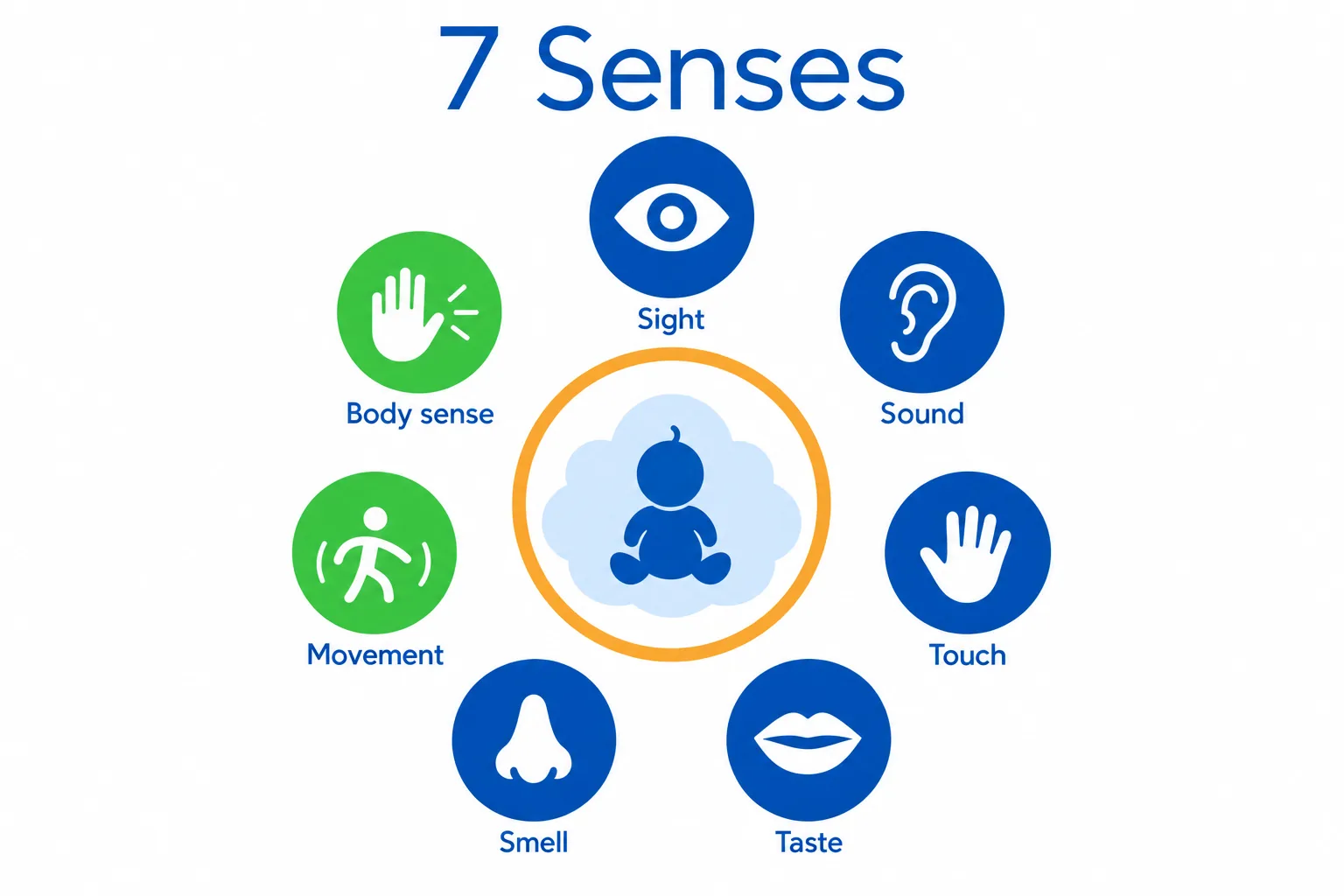
Sensory play is any activity that invites a child to use their senses on purpose: sight, sound, touch, taste, and smell, plus two that most lists skip. Movement (the vestibular sense) is why rocking, swaying, and being carried in a wrap count. Body awareness (proprioception) is why squeezing, pushing, and pulling count too.
For an infant there is no craft and no finished product. Sensory play is how a baby gathers first information about the world: cold is different from warm, crinkly sounds different from soft, this thing moves when I hit it.
In practice that means high-contrast cards, texture boards, sealed bottles and bags, tummy time on varied surfaces, safe kitchen objects to bang, water play, edible food play on a tray, and time outside.
Sensory activities like baskets of different items with interesting textures, letting them sniff spices and herbs, putting water or ice cubes …Read on Reddit ↗
Why Sensory Play Matters in the First Year
Babies learn through repetition. Reaching for the same rattle forty times is how hand-eye coordination gets built, how a baby practices crossing the midline of their body, and how grasp and release become reliable enough for a pincer grip later. Batting a hanging ring and hearing it jingle is a first lesson in cause and effect.
The language layer gets overlooked. Sensory play is the easiest teacher talk moment in the infant room, because the vocabulary sits right in front of you: cold, sticky, rough, squish, drip, loud. Narrating what a baby is touching builds vocabulary and sound awareness with no extra prep.
It is also not filler for spare time. The early learning frameworks infant programs already answer to, including the Head Start Early Learning Outcomes Framework and state early learning guidelines, set out perceptual, motor, and physical development goals for infants and toddlers. Sensory exploration belongs in the planned curriculum. Offering it consistently supports development across those domains, though no single activity produces a particular result for a particular child.
Safety Rules Before You Set Anything Out
Most activity lists skip this part. Do not.
- Assume everything goes in the mouth. Under twelve months, default to taste-safe materials. If you would not want it swallowed, it does not belong on the tray.
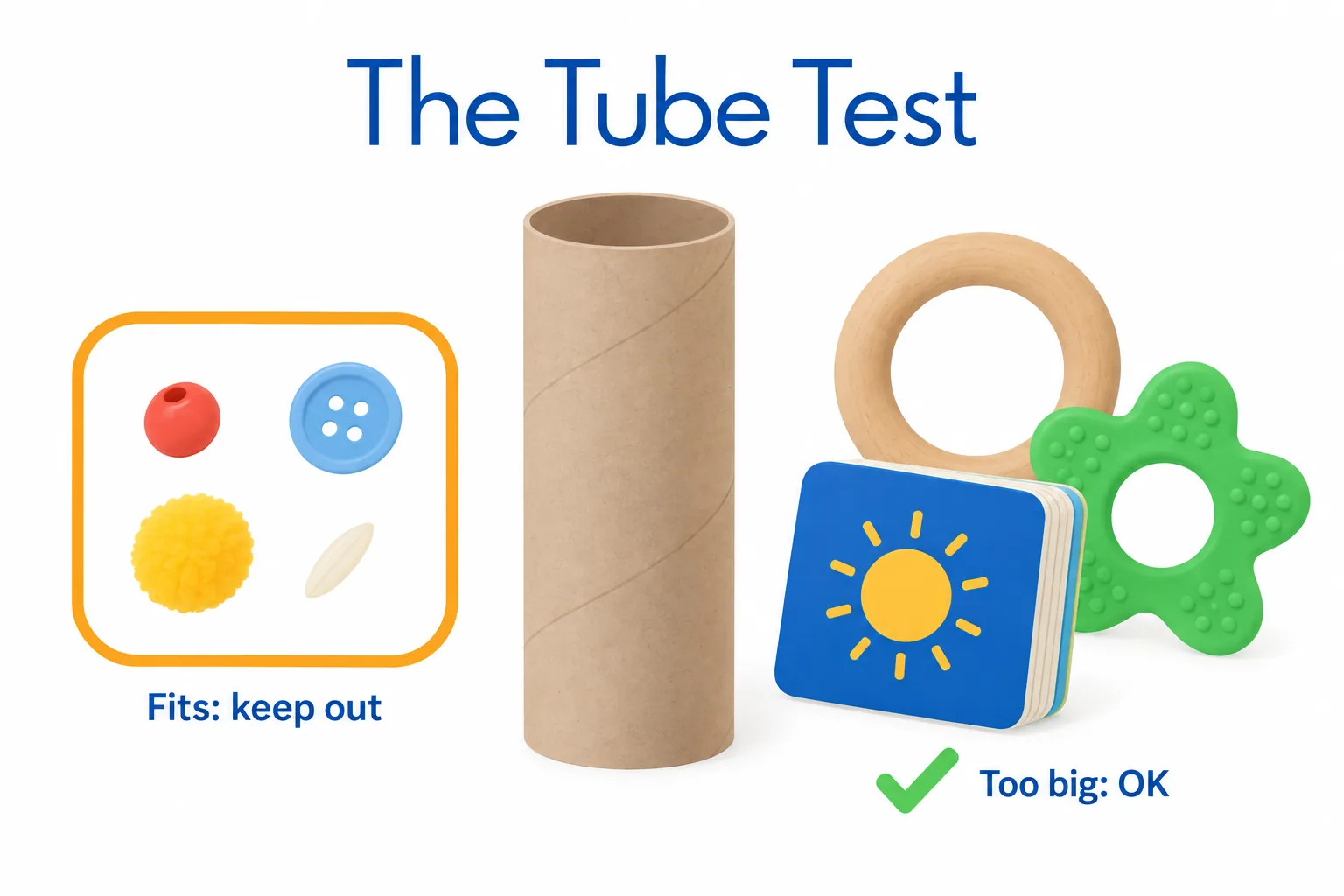
- Use the tube test. If an object fits through an empty toilet paper tube, keep it out of the infant room. That rules out loose beads, buttons, pom-poms, dry rice, small pasta, and craft eyes.
- Seal everything twice. Double-bag sensory bags and tape all four sides. Hot-glue bottle caps shut. Check for leaks and seam splits before every use, not just the first one.
- Skip water beads entirely. They expand in liquid and look exactly like something worth mouthing. There is no version worth the risk in a room of babies.
- Stay seated at the child’s level. Sensory play is supervised play, not five minutes to do something else. Water play in particular means hands free and eyes on.
- Check allergies first. With food materials in a licensed program, cross-check every family’s allergy list, and be ready to explain your food-use policy to families who are sensitive about waste.
Sensory Play Activities for Babies 0-3 Months
Newborns focus best on things held close to the face, and they notice strong contrast before they notice color.
- High-contrast cards propped at the edge of the play mat or taped beside the changing table, swapped every few days.
- Sheer scarf peek-a-boo, drifting fabric slowly over the chest and face so the baby feels the lightness and watches it move.
- Gentle massage after a diaper change, with soft narration of what you are touching.
- Fabric swatches brushed across open palms and the soles of the feet: fleece, corduroy, satin, terrycloth.
- The same song at the same time of day, so the baby starts to anticipate what comes next.
- Supervised tummy time on a textured blanket or in front of a shatterproof mirror, in short awake stretches.
Lay baby down on all the different surfaces in your house to touch and feel – sensory. Tickle baby and give them lots of cuddles – sensory. No …Read on Reddit ↗
Sensory Play Activities for Babies 3-6 Months
This is the reaching stage. Give them something that rewards a swing of the arm.
- Crinkle ribbons or plastic rings hung from a play gym at batting height, so effort produces sound.
- Water sensory bag: a little water, a squeeze of clear hair gel, and a few large sealed items, double-bagged and taped flat to the floor for tummy time pressing.
- Sensory bottles with water, a little oil, and food coloring, cap glued shut, rolled slowly across the baby’s field of vision.
- Texture board: fabric squares glued firmly to sturdy cardboard, laid flat or mounted low on the wall.
- A chilled washcloth or teether for temperature contrast during teething.
Sensory Play Activities for Babies 6-9 Months
Once a baby sits independently, a high chair tray becomes the best sensory table you own. This is the stage most people mean when they ask what to do with a seven-month-old.
- Tray play with cooked and cooled pasta, rolled oats, mashed banana, or plain yogurt for finger painting they can safely taste.
- Kitchen band: metal spoons, plastic bowls, and a whisk, so they can compare a dull thud with a metallic ring.
- Fabric pull box: holes cut in a shoebox, scarves knotted end to end and stuffed inside. Pulling builds pincer grasp and quietly teaches object permanence.
- Shallow water bin with an inch or two of water, a cup, and a sponge, always within arm’s reach.
Sensory Play Activities for Babies 9-12 Months
Pulling up and cruising mean sensory play can go vertical.
- Sticky wall: contact paper taped sticky side out at pull-up height, with fabric scraps and large felt shapes to press on and peel off.
- Sensory window: a sealed, taped bag of colored gel stuck to a sunny window for backlit squishing.
- Container play: filling and dumping blocks, balls, and lids into bowls. Repetitive, deeply satisfying, and the earliest form of sorting.
- Outdoor sensory walk: grass, sand, bark, warm pavement, wind on the face, all narrated out loud.
- Taste-safe dough made from yogurt and oat flour, for squeezing and pinching.
How to Stretch One Sensory Activity Across a Whole Week
No infant teacher can build a new setup every morning, and you should not have to. Keep the material constant and change one variable a day. Cooked pasta Monday. Cold pasta from the fridge Tuesday. Pasta in a deep bowl instead of a flat tray Wednesday. Pasta with a spoon added Thursday. Pasta outside on a blanket Friday.
The babies get five genuinely different experiences. You wash one container. Jot a quick note on what each child did with the material and let those notes drive next week’s plan. These low-prep weekly lesson plan ideas for infants in childcare show how one material carries a full week of planned learning.
What Sensory Play Looks Like After the First Birthday
Once babies walk, sensory play gains structure: tools, steps, and simple goals. Between twelve and eighteen months, toddlers can compare household objects by texture and follow a short adult-led routine, which is where structured activities for young toddlers pick up the thread.
By two, a bin of textured sand or rice with scoops, cups, and buried objects extends the same skills into pretend play, early math, and language. These age-appropriate activities for two-year-olds in daycare show how scooping and pouring turn into counting and storytelling. The progression is continuous, which is why it helps to plan infant through Pre-K in one place rather than stitching together age-segmented programs.
Frequently Asked Questions
Related readingCloud-Based Infant Curriculum | Learning Beyond PaperRead the guide →Frequently asked questions
What are some good sensory things for newborns?
What are some good sensory activities for a 7-month-old baby?
What are some fun five senses activities?
How long should sensory play last with an infant?
What if a baby hates messy textures?
Bringing Sensory Play Into Your Program
The hard part was never the pasta. It is planning fifty-two weeks of intentional infant activities while covering ratios, documenting for licensing, and supporting a team where someone is always new.
One cloud-based subscription from Learning Beyond Paper covers Infant through Pre-K 4, with bilingual English and Spanish content included, lessons aligned to Head Start ELOF, all 50 state standards, and CLASS indicators, plus embedded professional development your teachers can take without leaving the platform. ELBY, the virtual instructional coach built into the app, answers the questions that come up mid-shift, the ones there is never time to email about. No binders to replace, no add-ons to buy.
If your infant room deserves better than a 6 a.m. Pinterest search, watch a short demo and see how it works in a real classroom. You can try it with your own teachers before you commit to anything.
Written by Peter Smith, CEO and President of Learning Beyond Paper, Boca Raton, Florida.