Infant Curriculum (Ages 0–12 Months)

Digital Infant Curriculum for Birth to 12 Months

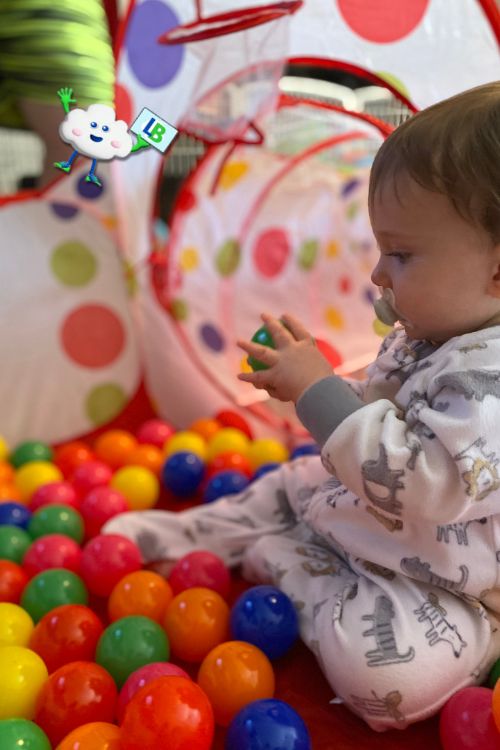
Babies in your infant room eat, sleep and play on their own clocks. Our digital infant curriculum gives teachers short, relationship-first activities that fit around those rhythms, with a coach inside every lesson.
Google Rating
4.8
Your trusted partner for modern growth

Sign up and try it FREE for 30 days

States
0
Schools
0 +
Teachers
0 +
Children
0 +
Digital infant curriculum

Why the Infant Room Is the Hardest Room to Plan For

The infant room runs on several clocks at once. One baby needs a bottle, another is fighting sleep, a third just woke up ready to play, and a group schedule assumes they are all doing the same thing. Babies this age learn inside relationships: the CDC lists taking turns making sounds with a caregiver among 6-month milestones, and by 9 months most babies are wary of strangers, so who holds them matters. A binder can’t tell a new teacher what to try with a four-month-old during tummy time.

Learning Beyond Paper gives infant teachers short activities that fit each baby’s rhythm and a virtual instructional coach in every lesson. Directors switching platforms can follow our step-by-step teacher onboarding plan to get the room started.

Our Partners

Watch an Infant Lesson Open

A short walkthrough of how an infant teacher finds the day's activity and ELBY's tips on a phone, tablet or computer.

Browse a Year of Infant Lessons

See how 52 weeks of sensory, language, movement and attachment activities are planned for babies up to 12 months.

Talk Through Your Infant Room

Book a demo and walk through your babies' schedules, your staffing and how the activities would fit your day.

What Infant Teachers Find Inside Every Lesson

Infant teachers rarely get a quiet planning block. So the plan, the coaching and the training sit inside the lesson itself: open it during a calm moment, see what to do with the baby in front of you, and learn why it matters while you teach.

Infant learning with a digital curriculum

Infant Activities Built Around Care Routines

Each activity is short and has a clear objective. Teachers can fold it into floor time, a diaper change or the alert minutes after a bottle, then repeat it with the next baby who wakes.

Infant learning with a digital curriculum

ELBY — Coaching for Real Infant Room Moments

Questions come up fast with babies. Teachers can ask ELBY how to adapt an activity for a teething, fussy baby, what to use when a material is missing, or how to share the day's activity with a family.

Infant learning with a digital curriculum

Training for Teachers New to Babies

A teacher who has never cared for a group of babies needs more than a schedule. LBP's 49.5 hours of embedded professional development sit beside the lessons, so the why behind each activity is explained while they work.

What Babies Learn in Their First Year With LBP

In the first year, learning happens inside relationships and daily routines. Our digital infant curriculum plans for each of these areas, so a feed, a diaper change or a stretch of floor time can carry a purpose.

Sensory Exploration

Early Language Development

3D illustration of an atom with orange rings around blue and purple particles showing plus and minus signs

Social-Emotional Attachment

3D illustration of three stacked books in purple, orange and blue with round black glasses on top

Gross Motor Skills

3D illustration of a pair of purple sneakers with orange stripes and orange heel loops

Cognitive Development

3D illustration of three faceless figures in yellow, orange and purple standing on a blue and green globe

Family Engagement

3D illustration of a pink brain beside a glowing yellow light bulb with purple rays

What Changes in Your Infant Room

A curriculum won’t change your ratios. It can change what each shift looks like: a plan for every baby, coaching on hand, and families who hear more about their child’s day.

A new infant teacher has a starting point

Instead of guessing what to do with a four-month-old during floor time, a new teacher opens the week's plan and sees a short activity, its purpose and ELBY's tips.

Babies keep their own rhythms

Activities happen when each baby is fed, rested and alert, so no one is woken early or kept waiting for a bottle to match a group schedule.

Every shift works from the same plan

Openers, closers and floaters see the same week of activities on their own device, so a baby's day doesn't depend on who happens to be in the room.

Families hear more than bottles and diapers

Teachers can share the day's activity and ideas to try at home, in English or Spanish, so a parent at pickup hears what their baby explored.

Your Infant Room's First Week With Learning Beyond Paper

Here is what the first days look like when an infant room starts with Learning Beyond Paper.
Start a free 30-day trial for the school

Sign up and give your infant teachers their logins. Every age room is part of the trial, so your toddler and preschool teams can look too.

Teachers open the week's infant activities

On a phone, tablet or computer, a teacher reads the week's activities and objectives, checks the materials, and plans which babies to try each one with as they wake and finish feeds.

Watch, adjust and tell families
Teachers note how each baby responds, ask ELBY how to adapt for a baby who isn't ready yet, and share with families what their child explored that day.
Carry it into your toddler rooms
When your babies start walking, the same platform continues into young toddlers (12–24 months), older toddlers, preschool and pre-K, on one yearly subscription for the whole school.

Written by Early Childhood Educators Who Know Infant Care

Our curriculum team includes former program owners, directors and teachers, plus state curriculum reviewers and early learning trainers. They know the infant room’s real day: a bottle warming, two babies waking at once, a new teacher on their first shift, and a parent at pickup who wants to know more than how many diapers. Every activity and coaching tip was written with that room in mind.

Infant Room Questions From Directors and Teachers

Answers about schedules, mobility, primary caregiving and families before you try our digital infant curriculum.

Whenever each baby is ready. Infant activities are short and built around one clear objective, so a teacher can do one with a baby who just woke up, then repeat it with the next baby after their bottle. Nothing depends on the whole group being awake at once. Many teachers fold activities into moments that already happen: a song at the changing table, tummy time after a nap, sensory play after a feed. Our infant weekly lesson plan guide shows how to map activities to those routines.

Plenty. For non-mobile babies, learning is faces, voices, touch and time on the floor. Lessons for the youngest infants focus on sensory exploration, early language and the bond with a caregiver. The CDC lists pushing up onto forearms during tummy time and making sounds back when spoken to among 4-month milestones. Tummy time stays awake and supervised, and a sleepy baby goes to a safe sleep space. Our guide to baby sensory play by month adds ideas like high-contrast cards and textured blankets.

Teachers adapt the same activity to each baby. A song or sensory activity can be face-to-face play for a young infant on their back or tummy, and a reach, crawl or pull-up challenge for a mobile infant. By 9 months most babies sit without support, and by 12 months most pull up to stand and walk holding on to furniture, according to the CDC developmental milestones. Each activity includes tips for differentiating, and ELBY suggests ways to support a baby who needs more help or is ready for more.

It works well with it. In primary caregiving, each teacher is the main caregiver for a small group of babies and learns their cues, feeding preferences and sleep signs. ZERO TO THREE’s guide to primary caregiving and continuity of care notes those relationships can grow stronger over time. Because activities can run with one or two babies at a time, each primary caregiver can do the week’s plan with their own group, note what they see and share it with those families. Floaters and subs open the same plan when a teacher is out.

Parents of infants want more than a bottle-and-diaper log. ELBY helps teachers share the day’s activity, lesson updates and simple ideas to try at home, and @Home Connection newsletters keep families up to date on what their child is doing. LBP’s observation tools let teachers record what a baby did, such as rolling toward a toy or babbling back during a song, and share that progress with families. ELBY also replies in the language a teacher types in, which helps with families who speak a language other than English.

Mouthing is normal: the CDC lists putting things in the mouth to explore them among 6-month milestones. That makes supervision and material choice part of every sensory activity. Our month-by-month baby sensory play guide sets out the rules: assume everything goes in the mouth, use taste-safe materials under 12 months, keep anything that fits through a toilet paper tube out of the room, check sensory bag seals before each use, and check every family’s allergy list before using food. If a material doesn’t suit your room, ELBY can suggest a swap.

With the week’s plan for the room and the coaching inside it. Each activity explains what to do and why it matters, so a new teacher isn’t left guessing during floor time. ELBY answers questions in the moment, like how to adapt an activity for a fussy baby or which skills to watch for as a baby plays. The 49.5 hours of embedded professional development, with self-paced and live options through Learning Beyond University, build their practice over time. Directors can pair it with our plan for onboarding teachers onto a new digital curriculum.

Yes. Learning Beyond Paper aligns its birth-to-12-month lessons to the Head Start Early Learning Outcomes Framework (ELOF) and to all 50 states’ early learning standards, and lessons are built with CLASS® in mind. You can find your state’s alignment documents, organized by age band, on our curriculum alignments page. For Early Head Start programs, the curriculum helps document how daily infant activities connect to ELOF goals during monitoring.

No. Learning Beyond Paper is a yearly subscription for the whole school, so the infant room comes with every other classroom through pre-K: every teacher, ELBY, the 49.5 hours of professional development, English and Spanish content and standards alignment, with no per-teacher fees. There isn’t a single-classroom option, because the idea is that your babies move up into toddler rooms that use the same platform. Start with a free 30-day trial that opens every age room, then book a demo to talk through pricing for your program.

Yes. The platform is digital and cloud-based, so it works on a phone, tablet, laptop or desktop with an internet connection, and a teacher can glance at the next step without walking away from the babies. There is nothing to print and no binder to find on a shelf. Lessons and family resources are available in English and Spanish at no extra cost, so a bilingual teacher can switch languages to match a family.

Curriculum for Every Age Group in Your Program

Your babies won’t stay babies for long. When they start walking, the same platform is ready in every room through pre-K.

Save time and
book a call with us.

Smiling young children sitting cross legged on classroom floor near bookshelves, stock photo
Small icon graphic that displays as a plain white square with no visible details

Aligned to Head Start ELOF and 50 States

Infant lessons align to the ELOF and your state's early learning standards, which helps when licensing or monitoring visits come around.

Second small white icon graphic, appearing blank with no visible shapes or text

One Yearly Subscription for the Whole School

Your infant room is covered along with every toddler, preschool and pre-K classroom. Try it free for 30 days first.

Small white icon graphic that appears blank with no visible detail or text

Trusted by 3,000 Programs in 50 States

From a single infant room in a small center to multi-site programs, directors across all 50 states use LBP.

Curriculum by state

See how infant lessons line up with your state

Every state and Washington, DC has its own page naming the early learning standards our lessons are mapped to. Pick yours on the map.

Browse all state pages

Ready to Give Your Infant Teachers a Plan for Every Baby?

Let's Get You the Right Information

Tell us how your infant room runs, from group size to schedules, and we’ll show you how Learning Beyond Paper fits it and the rest of your school.
Where should we send your information?
Tell us about your program.

Start Your Free 30-Day Trial

Open the infant lessons and ELBY for your whole team today.

Book a Personalized Demo

Walk through an infant lesson live with a member of our team.

See Every Age Room

From newborns to four-year-olds, see how each age band builds on the one before.